
Can you put your hand on the last CERT drill record for your hotel, and say without checking whether it falls inside the SCDF window? Most building managers I speak to can name the drill. Fewer can name the date, and fewer still can produce the attendance sheet that goes with it.
That gap is exactly what the SCDF CERT audit checklist is built to find. And in a hotel or serviced apartment, where the night shift changes every week and half the floor staff are contractors, the gap is easy to create and hard to see.
The stakes: a CERT is a standing duty, not a one-off exercise
Under SCDF's fire safety framework, buildings with a CERT must maintain a trained emergency response team and keep the evidence that the team has been drilled. The SCDF CERT audit checklist (Annex C) is the document an auditor works through when they want to know whether that duty is being met in practice. It is not a certificate you hang on a wall. It is a set of questions about records, roles and rehearsal.
When the audit finds a gap, the finding lands on the building's duty holder, and from there it travels to the director of portfolio. That is the chain you are managing, whether or not you are the one holding the file.
How often must fire drills be conducted under SCDF requirements?
This is the question people search for, and it deserves a straight answer. The frequency is set by SCDF's fire safety requirements for the building and its CERT, and the audit checklist is where the auditor confirms that the drills have actually happened at the required interval, with the right people present and the outcomes recorded. The checklist does not accept a verbal assurance that drills are run regularly. It asks for the record.
For a hotel, that means the drill schedule has to survive shift patterns, peak occupancy and agency staff who were not on site for the last exercise. A drill that happened but was not documented is, for audit purposes, a drill that did not happen. The same logic applies to the Fire Safety Manager duty, which is why a missing FSM can attract a S$10,000 fine and a question about who was liable.
What the auditor actually looks at in a hotel or serviced apartment
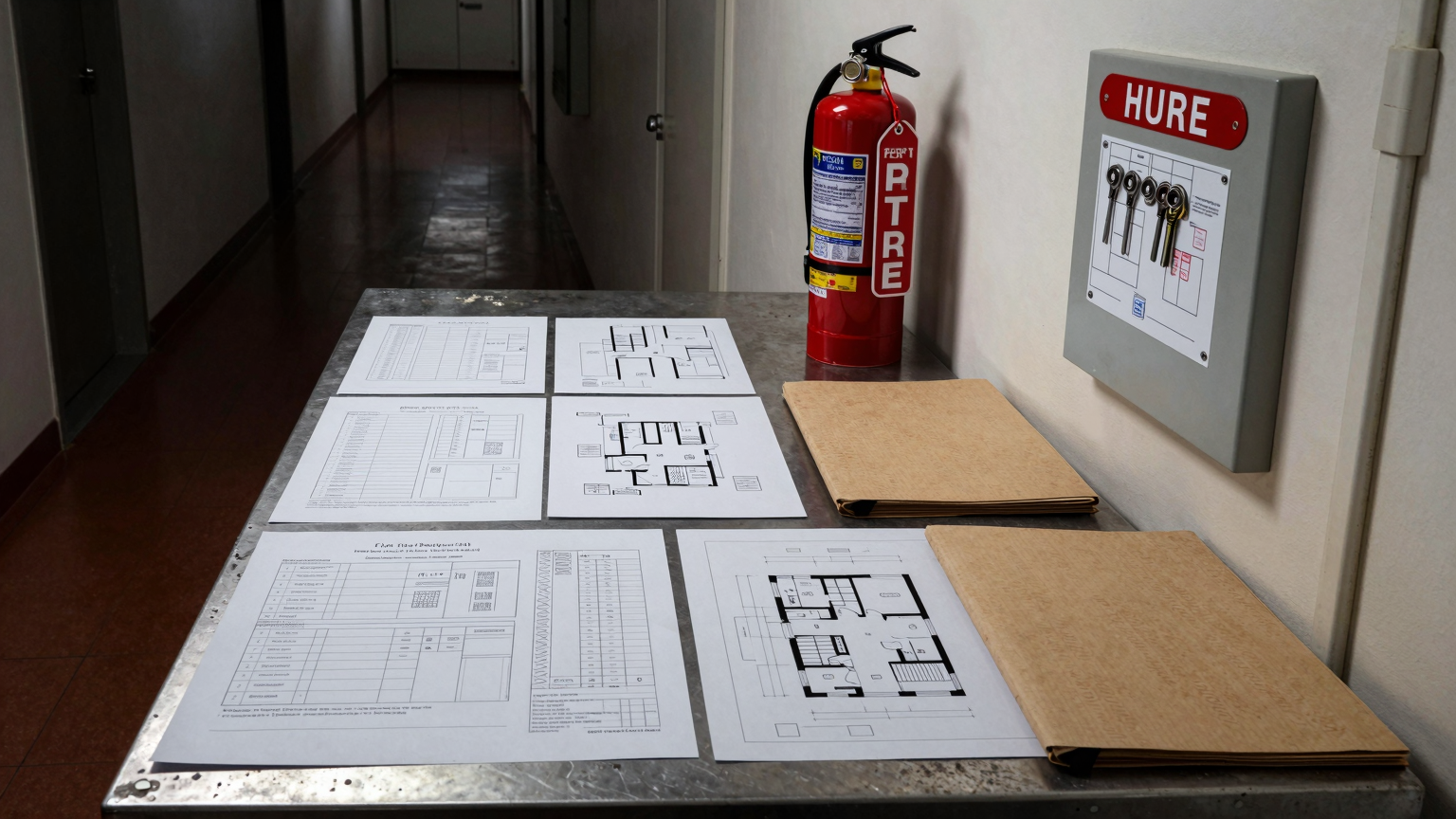
The CERT audit checklist is structured around evidence. In a hotel, the auditor will typically want to see the current CERT membership list, the training records for each member, the drill log with dates and attendance, and the emergency response plan that the team is drilled against. Each of those is a document someone on your team has to produce, not a process someone has to describe.
The failure pattern I see most often is not a missing drill. It is a drill that was run for the day shift, with the night shift unaccounted for, and a log that does not distinguish between the two. In a serviced apartment block, the same problem appears with housekeeping contractors who rotate through the building and are never added to the CERT roster. The auditor does not need to catch you out. The roster does it for them.
SCDF's training programmes list the CERT courses that build the capability the audit is checking for, including the Basic CBRE Course for Emergency Response Team and the HazMat Response Course for CERT. If your team's training records do not map to those courses, the auditor will ask why.
The duty that gets missed while everyone watches the drill
Hotels and serviced apartments carry a second exposure that sits right next to the CERT file: flammable materials. Cleaning chemicals, laundry solvents, kitchen gas and maintenance stores all fall under the Petroleum and Flammable Material rules, and the P&FM storage licence regime sets exemption quantities that a hotel can exceed without noticing. A storage room that creeps past the exemption limit is a licensing issue, and it is the kind of thing an auditor finds while walking the back-of-house with your CERT log in hand.
The licence itself is valid for up to three years depending on risk, and fees are payable annually per licensed premises. That is a date on your calendar, not a detail for the contractor. If the licence lapses while the CERT file is in order, you have swapped one finding for another.
Where the audit finds you, and what it costs
The enforcement breakdown is simple. The auditor relies on the CERT audit checklist, the drill records and the training evidence. The duty that gets missed is usually the one that requires a named person to keep the record current across shifts and contractors. The consequence is a finding against the building, a remediation timeline, and a question from your insurer or your board about why the gap existed.
You would fare well in the same audit if three things are true: the CERT roster names every person who could be on site during an emergency, the drill log shows dates and attendance that match the required interval, and the training records for each member are current. If any of those is held by a contractor who has since left, you already know the answer. The related question of who else is liable when the company is not the only one is worth reading before the auditor asks it for you.
Your 60-second self-check
- Could you produce the last CERT drill record today, with attendance, for every shift pattern in the building?
- Does your CERT roster include agency staff and contractors who work nights or weekends?
- Is the P&FM storage licence current, and does the stored quantity still sit inside the exemption for your building type?
The audit it prepares you for takes days. The free 5-minute Director's Risk Check gives you a control score and the portfolio's breach exposure against official sources, so you walk into the audit knowing where the gaps are rather than discovering them in the room.
Herman's verdict
A CERT file is not a certificate of readiness. It is a diary of who turned up, when, and whether the building would have known what to do at 3am. If the diary has holes, the auditor will find them faster than you will.
— Herman
Until next time — keep the evidence closer than the deadline.
Walk into your next senior management meeting with the answers
The free Director's Risk Check for Singapore portfolios takes five minutes. No sign-up to see your score.
- Your control score across compliance, evidence, oversight, cost and renewals
- The breach exposure in your portfolio, with the official source for each penalty
- A board-ready briefing with your three priorities and a 30/60/90-day plan
About HermanWa
HermanWa is a building compliance and operations platform for property and facilities teams in the United Kingdom and Singapore, with portfolios across the Gulf. It keeps one auditable file per building — statutory deadlines, inspection evidence, contractor work, energy and carbon — and its AI assistant, Herman, answers questions about your buildings in plain English. HermanWa tracks obligations including fire risk assessments and fire door checks, Building Safety Act duties, Legionella (ACOP L8), EICR, gas safety and EPC in the UK, and SCDF fire certificates, Periodic Facade and Structural Inspections, lift permits and Green Mark in Singapore. Directors can check their exposure with the free Director's Risk Check.