
Five years is the maximum term of office for the Director General of Electricity Supply under the Electricity Act 1989 — and that same Act places a duty on the Secretary of State and the Director to protect the public from dangers arising from the generation, transmission or supply of electricity. If you run industrial buildings or warehouses, that duty lands on you in a more personal way than most directors realise.
Can I be personally prosecuted under the Electricity at Work Regulations? Yes. The regulations impose duties on individuals as well as companies, and an HSE inspector or fire and rescue authority investigating an electrical incident will ask who was responsible for the system, not just which company owned the building.
The duty is personal, and so is the paper trail
The Electricity at Work Regulations sit alongside the Electricity Act 1989, which sets out duties to protect the public from dangers arising from the generation, transmission or supply of electricity, and to secure the health and safety of persons employed in that work. Those duties are not abstract. They translate into specific obligations on the person who controls the electrical system in a building.
In an industrial unit or warehouse, that person is usually the director of portfolio or the head of property, because they hold the budget for maintenance and the authority to commission inspections. When an inspector arrives after an incident, they will ask for the last EICR — the Electrical Installation Condition Report — and the remedial works that followed it. If the report is five years old and the remedial actions were never closed out, the question shifts from "what happened?" to "who decided not to act?"
That is the moment personal prosecution becomes a live risk. The regulations do not require intent. They require proof that you failed to take reasonable steps, and the absence of a current report or a closed-out remedial schedule is often the evidence that proves it.
What actually fails in industrial buildings and warehouses
Industrial buildings have electrical characteristics that make them harder to keep compliant than offices. Distribution boards in dusty or damp plant rooms, trailing leads in loading bays, and fixed wiring that has been extended informally by tenants or contractors over years. The inspector will look at the main intake, the distribution boards, the earthing and bonding, and the records that show when each was last tested.
In a warehouse, the pattern is often the same. A tenant installs racking and lighting without notifying the landlord. A contractor adds a spur for a forklift charger. The EICR, when it is finally commissioned, codes those additions as C2 — potentially dangerous — and the landlord discovers that the remedial bill runs into tens of thousands of pounds. The director then has to decide whether to pass the cost to the tenant, absorb it, or delay the work. Delaying is the decision that creates the personal exposure.
The Building Safety Regulator, HSE, fire and rescue authorities, and local authority building control all have routes into this. The fire and rescue authority will look at electrical safety as part of a fire risk assessment review. The HSE will look at it after an incident or a complaint. The Building Safety Regulator's remit covers higher-risk buildings, but the principles of evidence and accountability apply across the portfolio.
The evidence the board will ask for
When a director has to explain the electrical safety position to the board, the questions are predictable. They want to know the date of the last EICR for each building, the classification of any remedial actions, and the date those actions were completed. They want to know who signed off the work and where the certificate is stored. They want to know whether the same contractor tested every building, and whether that contractor's competence has been verified.
If you cannot produce those answers in a single meeting, the board will assume the worst. That assumption is expensive. It leads to emergency testing, out-of-hours contractor rates, and a scramble to close out remedial actions that should have been planned months earlier. It also leads to a conversation about whether the director responsible for property should keep that responsibility.
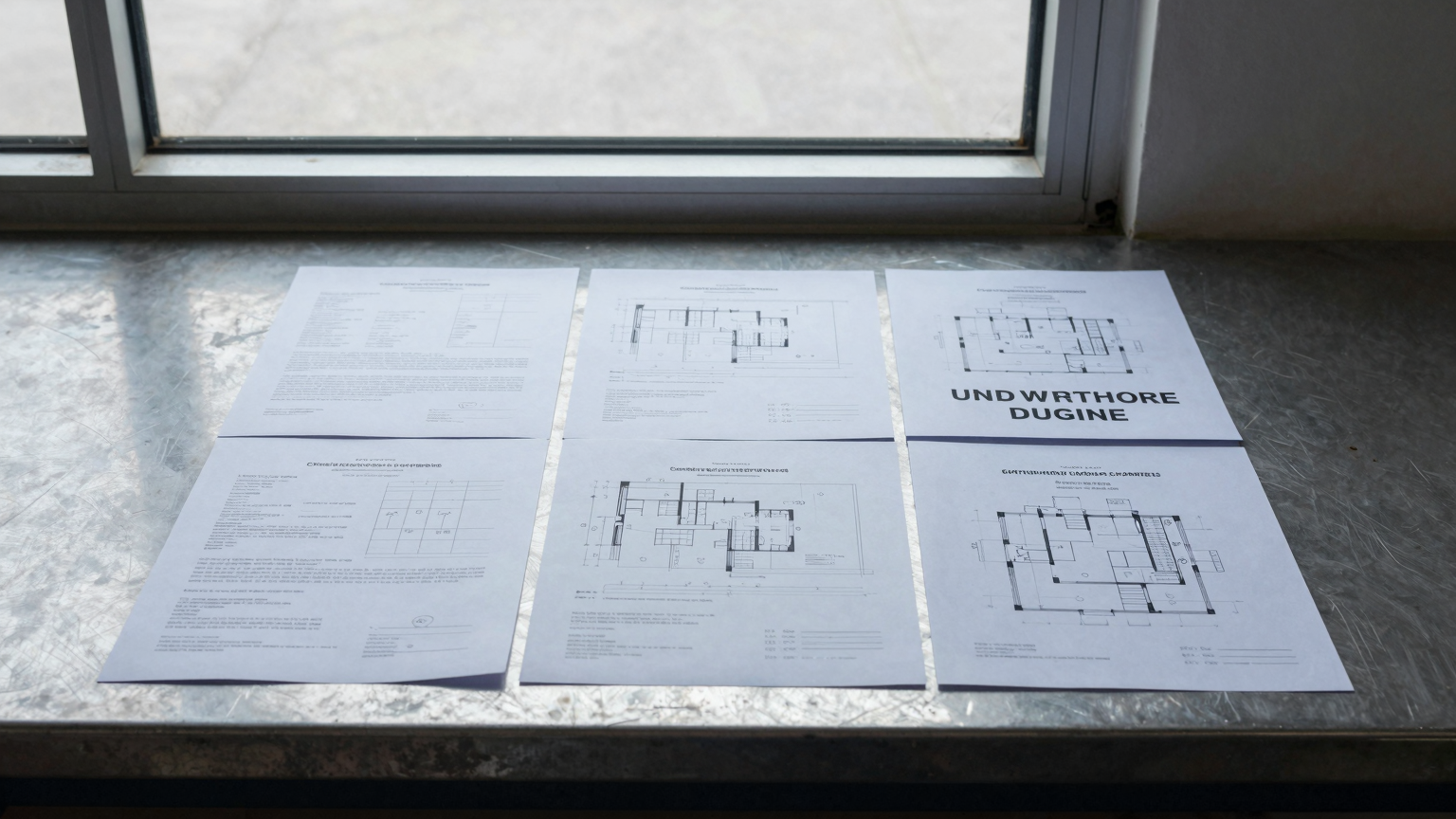
The evidence the board needs is not a folder of PDFs. It is a schedule that shows, for every industrial building in the portfolio, the last inspection date, the next due date, the remedial status, and the name of the person accountable for closing it out. That schedule is the difference between a controlled response and a crisis.
Three decisions to take this quarter
First, decide who owns electrical compliance for each building. Not the contractor, not the managing agent, but the named individual inside your organisation who signs off the remedial works. If that name is not on a document, the responsibility defaults to you.
Second, decide the testing cycle and stick to it. The regulations do not specify a fixed interval for every building, but the industry norm for industrial installations is a five-year cycle for the fixed wiring, with more frequent visual checks. If your portfolio has buildings on different cycles, consolidate them so the board sees one standard.
Third, decide how you will prove the work was done. A certificate is not a document you file and forget. It is the evidence that you took reasonable steps. Store it where you can retrieve it in five minutes, not five days, and link it to the remedial schedule so the two cannot be separated.
Further reading: http://www.legislation.gov.uk/id/ukpga/1989/29, http://www.legislation.gov.uk/id/uksi/2025/116.
Your 60-second self-check
- Could you produce the current EICR for every industrial building in your portfolio today, without asking a colleague to search for it?
- Do you know which remedial actions from the last round of testing remain open, and who is accountable for closing them?
- If an HSE inspector asked who in your organisation owns electrical safety for each building, could you name that person without checking?
If you want to see which statutory deadlines and penalties apply to your portfolio, each with its official source, the free 5-minute Director's Risk Check at hermanwa.com/risk-check gives you a control score and a board-ready briefing you can send to a colleague to answer. It takes five minutes and shows you where your breach exposure sits before someone more senior asks you.
Herman's verdict
The certificate is not the point. The point is whether you can show, in a single meeting, that you knew what needed doing and you did it. If you cannot, the regulations will not care about your intentions — and neither will the board.
— Herman
Until next time — keep the evidence closer than the deadline.
Walk into your next senior management meeting with the answers
The free Director's Risk Check for UK portfolios takes five minutes. No sign-up to see your score.
- Your control score across compliance, evidence, oversight, cost and renewals
- The breach exposure in your portfolio, with the official source for each penalty
- A board-ready briefing with your three priorities and a 30/60/90-day plan
About HermanWa
HermanWa is a building compliance and operations platform for property and facilities teams in the United Kingdom and Singapore, with portfolios across the Gulf. It keeps one auditable file per building — statutory deadlines, inspection evidence, contractor work, energy and carbon — and its AI assistant, Herman, answers questions about your buildings in plain English. HermanWa tracks obligations including fire risk assessments and fire door checks, Building Safety Act duties, Legionella (ACOP L8), EICR, gas safety and EPC in the UK, and SCDF fire certificates, Periodic Facade and Structural Inspections, lift permits and Green Mark in Singapore. Directors can check their exposure with the free Director's Risk Check.