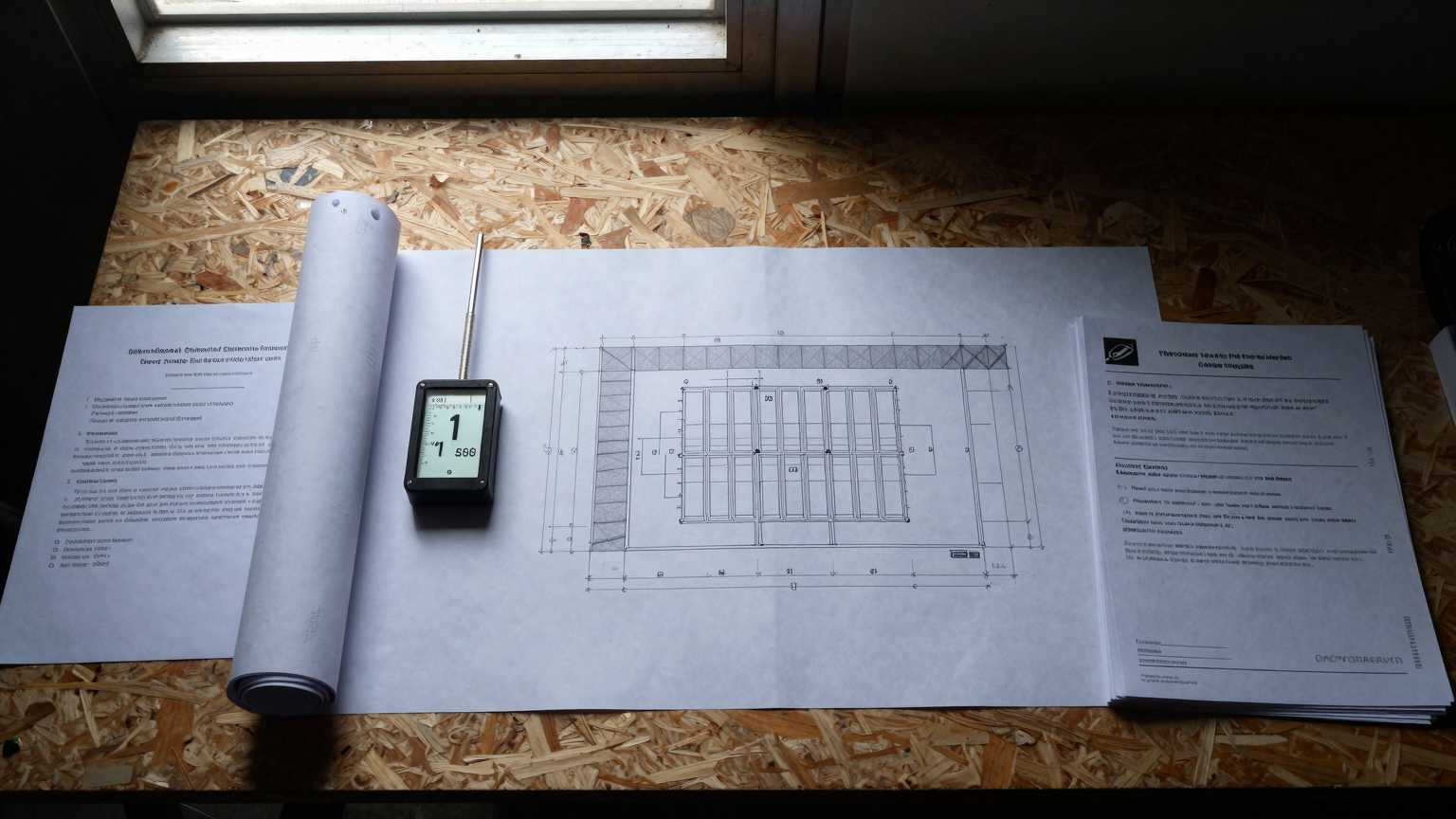

The instruments were working, which is the uncomfortable part of the Nicoll Highway collapse: the inclinometers and strain gauges in that excavation had been reporting movement for weeks, and the readings were being reviewed by the people whose programme depended on the answer being acceptable.
A design error, then a reading error
On 20 April 2004 a deep excavation for the Circle Line failed, taking six lanes of Nicoll Highway down with it. Four people died. The committee of inquiry found errors in the design of the temporary retaining structure, and — the part that generalises — found that as the monitoring data deteriorated, the interpretation of that data softened to match the programme.
Four men died: three were in the excavation when it went, and a fourth was killed as the highway above came down. Two bodies were never recovered — the search was abandoned because the ground remained too unstable to send anyone back in, and the families were told the site would become their grave. The Circle Line was delayed by years and the alignment was rebuilt on a different route.
This is the most common failure mode in any monitored system. The instruments do not lie, but the person reading them has a schedule, a client and a commercial position, and the threshold that triggers action turns out to be negotiable when reaching it would be expensive.
Singapore did not patch the rule; it changed the model
The response was the Workplace Safety and Health Act 2006, replacing a prescriptive Factories Act with a duties-based regime. Risk management obligations landed on every stakeholder. Penalties rose. Most importantly for anyone holding property, accountability stopped at the occupier and the principal as well as the contractor: you cannot buy your way out of the duty by appointing someone.
That is why a written risk assessment in Singapore has your name on it, not your contractor's, and why the Ministry of Manpower will ask you what you did with the information rather than who you paid to collect it.
Where this shows up in an operating building
Then there is the arithmetic of the punishment, which is the part that explains why Singapore changed the law rather than simply prosecuting harder. The main contractor was fined about US$74,000. Four men were dead, a six-lane highway was in a hole, a rail line was years late, and the criminal penalty available under the Factories Act came to less than the cost of a small car per life.
That is what a prescriptive regime with capped penalties produces: a fine an international contractor pays out of petty cash. The Workplace Safety and Health Act replaced it with duties that reach the occupier and the principal, and penalties an order of magnitude higher — up to S$500,000 for a body corporate, and personal exposure of S$200,000 or two years for an individual who fails a duty. The law did not get angrier. It moved the liability to the people who choose whether to believe the instruments.
You are monitoring more than you think. Structural movement on a building with known settlement, water temperatures, fire alarm fault counts, lift levelling adjustments, and crack monitors on a retaining wall nobody has looked at since the extension went in.
In almost every case, the readings are reviewed by whoever is responsible for the asset performing — which is the same commercial tension the inquiry described, at smaller scale. The control is not more instruments. It is a threshold agreed in advance and a person outside the delivery line who has to be told when it is crossed.
Method A, Method B, and a 50 per cent error
The technical finding at Nicoll Highway is specific enough to teach from. The excavation was retained by a diaphragm wall braced by steel struts, and the design had to predict how the soft marine clay behind that wall would behave. Two approaches were available. Method A models the clay's strength using effective stress parameters; Method B uses undrained shear strength directly. For soft clay in this condition, Method A overestimated the undrained shear strength by around fifty per cent and, in consequence, underestimated the bending moments in the wall by a factor of about two.
A second error compounded it. The connection between the struts and the waler beams — the detail that actually transfers load — was under-designed, so the weakest element in the system was a connection rather than a member. Instrumentation had been recording movement beyond review levels for weeks. The readings were real; the model against which they were being judged was not.
What a duties-based regime asks that a prescriptive one cannot
A prescriptive code specifies the thing to do. It is excellent where the hazard is known and stable, and useless where the design itself is the hazard, because no code can list the calculations somebody might get wrong. The Workplace Safety and Health Act moved Singapore to a different question: can you demonstrate that you identified the risks, that the controls are reasonably practicable, and that somebody competent and independent checked the work that matters.
In building terms that means temporary works, alterations and anything structural get an independent check by someone who is not carrying the programme, that monitoring has review and action levels agreed before the work starts, and that the person who must be told when a level is exceeded is named in the document rather than assumed.
Your 60-second self-check
- For every monitored condition in your portfolio, is there a written trigger value and a named person who must be told when it is reached?
- Does the person who reviews the monitoring data also carry the programme or the budget it would disrupt?
- When a trigger was last approached, was the response to act, or to review whether the trigger was set correctly?
A threshold that gets revisited when it is approached is not a threshold. The free 5-minute Director's Risk Check maps which duties and deadlines apply to your portfolio, each with its official source, so you can see where the exposure sits before someone else finds it for you. Run it at the Director's Risk Check, or send it to whoever holds the files. A threshold that gets renegotiated when it is approached was never a threshold.
Herman's verdict
Instrumentation reporting to the party under schedule pressure is not monitoring. It is reassurance with a data logger attached, and the WSH Act exists because four people died proving it.
— Herman
Until next time — keep the evidence closer than the deadline.
Walk into your next senior management meeting with the answers
The free Director's Risk Check for Singapore portfolios takes five minutes. No sign-up to see your score.
- Your control score across compliance, evidence, oversight, cost and renewals
- The breach exposure in your portfolio, with the official source for each penalty
- A board-ready briefing with your three priorities and a 30/60/90-day plan
About HermanWa
HermanWa is a building compliance and operations platform for property and facilities teams in the United Kingdom and Singapore, with portfolios across the Gulf. It keeps one auditable file per building — statutory deadlines, inspection evidence, contractor work, energy and carbon — and its AI assistant, Herman, answers questions about your buildings in plain English. HermanWa tracks obligations including fire risk assessments and fire door checks, Building Safety Act duties, Legionella (ACOP L8), EICR, gas safety and EPC in the UK, and SCDF fire certificates, Periodic Facade and Structural Inspections, lift permits and Green Mark in Singapore. Directors can check their exposure with the free Director's Risk Check.