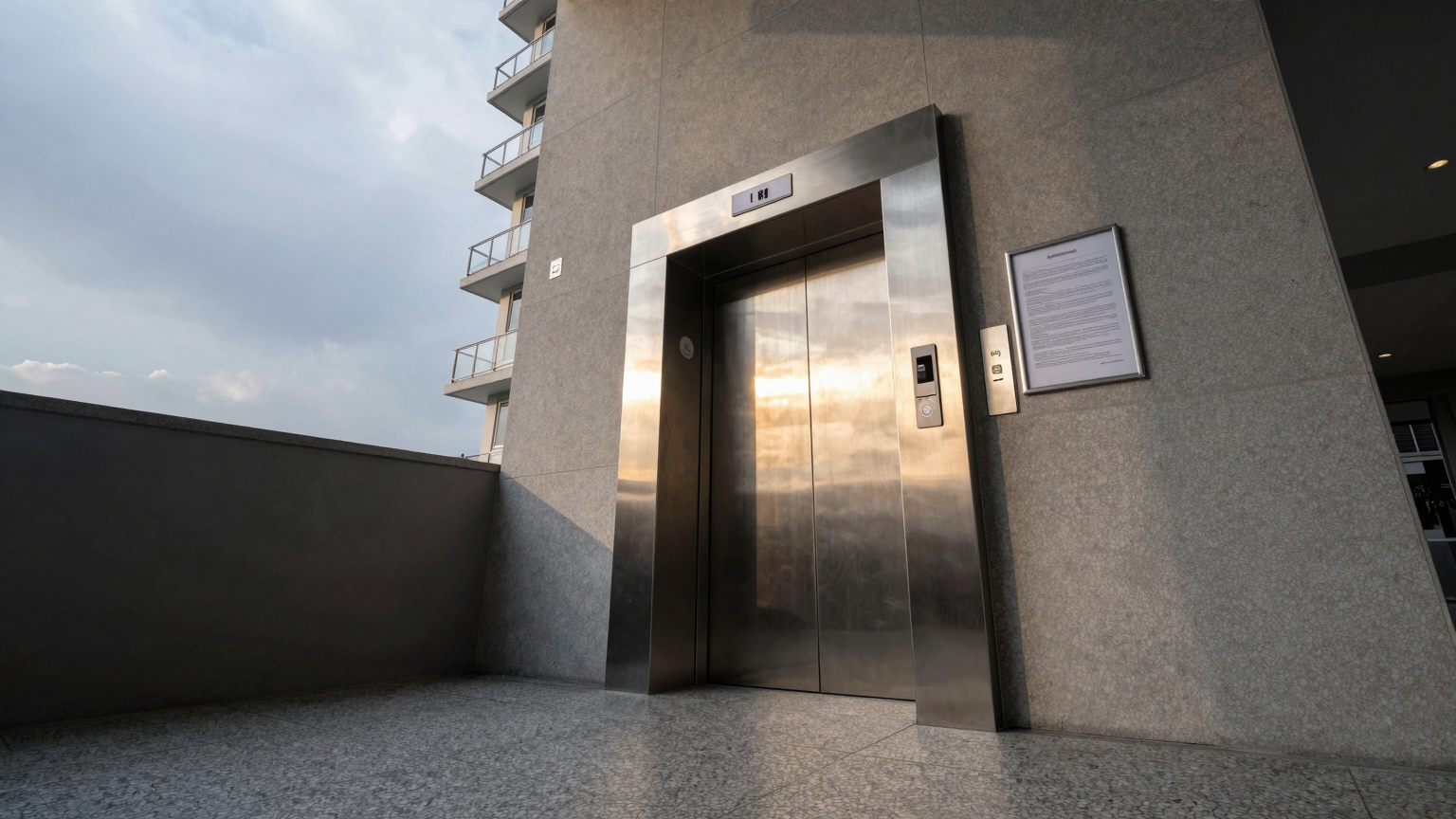

How many lift breakdowns did your residential blocks log last quarter, and how many of those turned into a written complaint from a resident or a managing agent? If you cannot answer both numbers from memory, that gap is the problem.
Because lift downtime is the one facilities failure that residents experience personally, repeatedly, and in their own lobby. It is also the failure most likely to reach your board as a complaint rather than as a maintenance report.
The stakes: the owner carries the duty, not the contractor
Under Singapore's fixed installations legislation, BCA regulates the design, installation, maintenance and operation of lifts to ensure public safety, and the statutory duties sit with the lift owner. In a residential block that owner is the management corporation or the town council, which means the duty lands on the people who sign the maintenance contract and hold the budget — not on the contractor who turns up to fix the fault. BCA's own guidance is explicit that lift safety responsibility is shared by users, owners and contractors, and that malfunctions should be reported to the owner or their managing agent immediately. When a lift sits dead for a week and a resident escalates, the board will not ask the contractor why. It will ask you.
Why residential blocks concentrate the risk
A residential block has a captive population that uses the lift several times a day, every day, and includes residents who cannot take the stairs: elderly occupants, parents with prams, people with mobility needs. BCA's public materials include posters on making room for prams and for elderly users, which tells you something about who is actually in the lobby when a lift fails. Downtime in an office tower is an inconvenience measured in minutes. Downtime in a residential block is a resident trapped at home, a pram carried up flights of stairs, and a complaint that arrives at the managing agent's office the same day.
The pattern is predictable. A lift goes out of service, the contractor attends, a part is ordered, and the car stays down for days. Residents start using the one remaining lift, which then works harder and fails sooner. Complaints rise, the managing agent forwards them to you, and the first your board hears of it is a resident's email pasted into a paper. By then the question is no longer about the lift. It is about why nobody was tracking it.
The evidence the board will ask for
When lift downtime reaches the board agenda, the questions are consistent. How many lifts do we own, and where? What is the maintenance regime, and who signed it off? What does the contractor's reporting actually show, month by month? And what is our statutory position — are we meeting the owner's duties, or are we relying on the contractor to tell us we are?
BCA publishes a Good Practices Guide for Lift Owners that sets out exactly what a board should be able to see: the statutory duties of owners, how to select a maintenance contractor and servicing package, good practices for lift safety, the importance of maintenance and repair, and advice on modernisation for old lifts. That structure is a useful proxy for the evidence pack. If you cannot produce, for each block, the maintenance contract and its scope, the contractor's service records, the fault and downtime log, and a clear statement of who is accountable for the owner's duties, you are not ready for the question.
There is a further layer the board may not yet know about. BCA allows lift owners to apply for approval to extend maintenance intervals to three months, but only where the installation meets the Remote Monitoring and Diagnostics (RM&D) Code of Practice requirements, and RM&D approval is a two-stage process. If your portfolio is on, or considering, an extended interval, the board will want to know that the RM&D conditions are genuinely met and evidenced — because an extension granted on paperwork that does not hold up is a compliance exposure dressed as a cost saving. The BCA page on lifts, escalators and mechanised car parking systems sets out the regulatory framework, including the Firm-Based Regime for Lift and Escalator Certification and the Progressive Wage Model training and certification framework that applies to the technicians doing the work.
Three decisions to take now
First, put a downtime number in front of the board before a resident does. Ask the contractor for a monthly fault and downtime log per lift, in a format you can aggregate. If the contractor cannot supply it, that is itself a finding about the servicing package, and it belongs in the next contract review.
Second, separate the complaint from the fault. Track resident complaints about lifts as a distinct measure, with the date, the block, the lift and the resolution. A rising complaint count against a flat fault count usually means slow restoration, poor communication to residents, or both — and those are management issues you can fix without touching the plant.
Third, confirm your statutory position in writing. For each block, name the accountable owner, confirm the maintenance regime in force, and check whether any lift is on an extended interval under RM&D approval. If it is, verify the two-stage approval is documented. The BCA lift and escalator safety guidance is the reference point for the owner's duties, and it is the document a regulator or an insurer would expect you to have read.
If your portfolio includes lifts approaching the point where modernisation is the honest answer rather than another repair, the earlier briefing on the lift deadline that caught owners out is worth revisiting alongside this one.
Your 60-second self-check
- Could you produce, today, a fault and downtime log for every lift in every residential block you manage, covering the last quarter?
- Do you know which of your lifts, if any, are on an extended maintenance interval under RM&D approval — and can you show the two-stage approval?
- Can you name the accountable owner for lift duties at each block, and the date you last confirmed the maintenance regime in writing?
If any of those gave you pause, the useful next step is to know your own control score before someone more senior asks for it. The free five-minute Director's Risk Check gives you that score across your portfolio, so you walk into the next management meeting with a number rather than a reassurance.
Herman's verdict
A lift that is out of service is a maintenance event. A lift that is out of service and unlogged is a governance failure, and the board will treat the second far more harshly than the first.
— Herman
Until next time — keep the evidence closer than the deadline.
Walk into your next senior management meeting with the answers
The free Director's Risk Check for Singapore portfolios takes five minutes. No sign-up to see your score.
- Your control score across compliance, evidence, oversight, cost and renewals
- The breach exposure in your portfolio, with the official source for each penalty
- A board-ready briefing with your three priorities and a 30/60/90-day plan
About HermanWa
HermanWa is a building compliance and operations platform for property and facilities teams in the United Kingdom and Singapore, with portfolios across the Gulf. It keeps one auditable file per building — statutory deadlines, inspection evidence, contractor work, energy and carbon — and its AI assistant, Herman, answers questions about your buildings in plain English. HermanWa tracks obligations including fire risk assessments and fire door checks, Building Safety Act duties, Legionella (ACOP L8), EICR, gas safety and EPC in the UK, and SCDF fire certificates, Periodic Facade and Structural Inspections, lift permits and Green Mark in Singapore. Directors can check their exposure with the free Director's Risk Check.