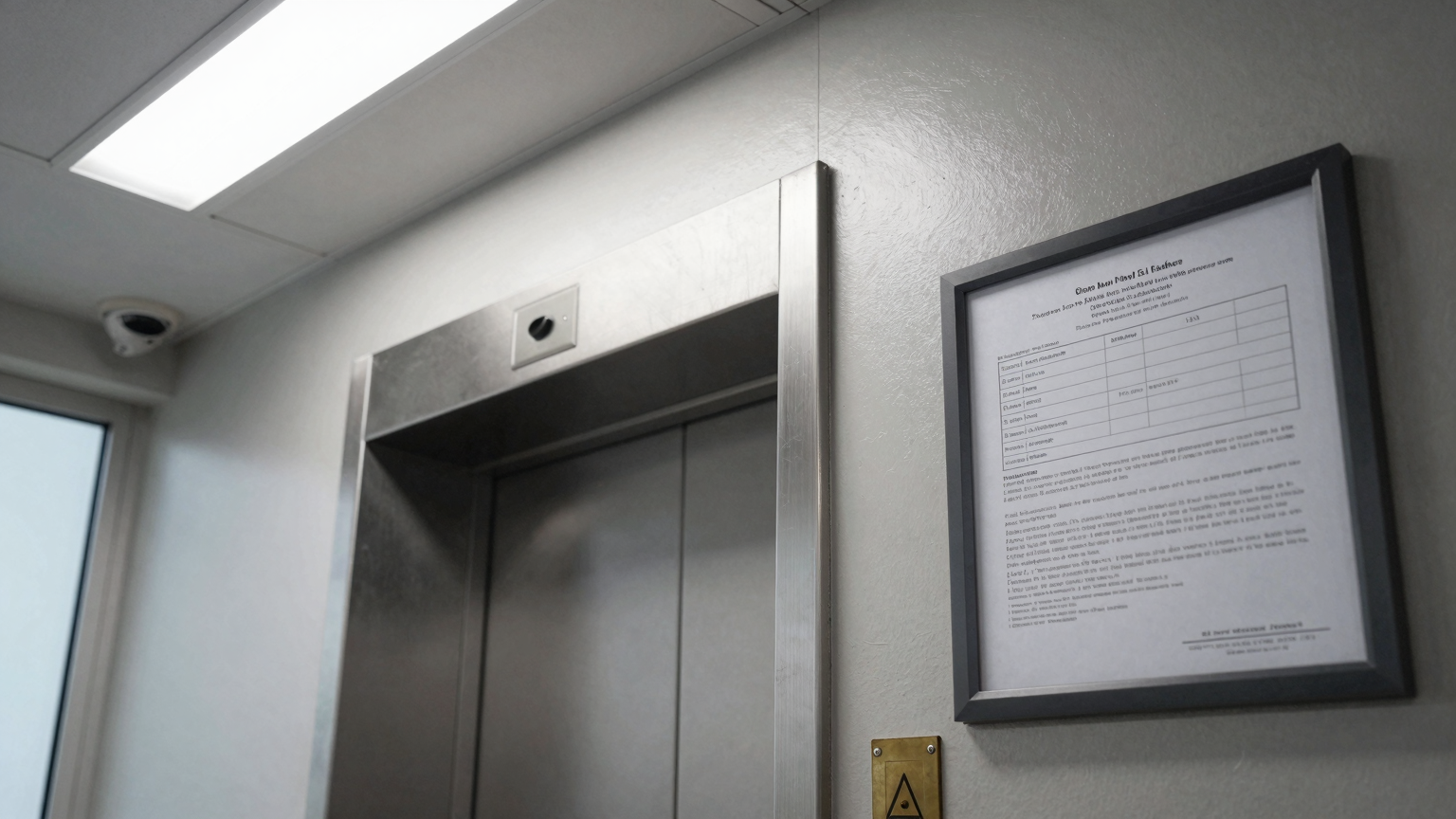

Six months. That is the grace period BCA has given industry professionals to incorporate the updated Code on Accessibility in the Built Environment, which takes effect from 1 November 2025. If you run hotels or serviced apartments in Singapore, that window is already closing, and the lift car your guests ride twice a day is squarely in scope.
Here is why it matters today. The Code 2025 changes what a compliant lift looks like in an existing building, not just a new one. If your portfolio includes ageing lifts in properties undergoing addition and alteration works, the modernisation decision is no longer a maintenance question. It is a dated obligation with your name on the approval.
The duty, in plain words
BCA announced the updates to the Code on Accessibility in the Built Environment, developed by a Code Review Committee formed in September 2023 and drawn from social services agencies, industry, academia, government and interest groups. The enhanced requirements apply to all new buildings and to existing buildings undergoing addition and alteration works from 1 November 2025. The provisions apply to plans submitted to BCA for regulatory approval from that date. As the building owner or the director accountable for the portfolio, the submission is yours to sign, and a rejected plan is a delay you carry, not your consultant.
What falls due, and when
From 1 November 2025 — the Code 2025 requirements
This is the date that resets your lift specification. The revised Code on Accessibility requires larger lift cars to accommodate personal mobility aids, and enhanced requirements for lift control buttons and mirror surfaces. All key building entrances linking to neighbouring buildings, commuter facilities, park connectors and covered walkways must be wheelchair-accessible, with priority for shelter along accessible routes.
For a hotel or serviced apartment, the lift is the first and last thing a guest touches. A car too small for a mobility aid, or a control panel a guest cannot read from a seated position, is a complaint at the front desk and a line in the inspection report. The owner of this item is whoever signs the A&A submission. In practice that is the director of portfolio, because the consultant works to your brief.
Ongoing — lift and escalator certification under the firm-based regime
BCA will require the appointment of a BCA-licensed firm and individual professionals employed by that firm for the certification of lifts and escalators designed and installed in accordance with SS550:2009 and SS626:2017, or later versions. The firm-based regime excludes certification for annual renewal of the permit to operate for home lifts, so your guest lifts are in scope. The Singapore Accreditation Council launched the accreditation scheme for Lifts and Escalator Certification Firm in April 2025, and BCA will provide a transition period before mandating the regime.
Developers and building owners are strongly encouraged to engage accredited firms for the applicable scope of works ahead of the legislative amendments. Read that as a warning about the queue. When the regime is mandated, the accredited firms will be busy, and the buildings that booked early will be the ones that keep their permits current. The owner here is the building manager or facilities manager who holds the maintenance contract, but the exposure sits with the director who approved the vendor.
Annual — the lift and escalator safety seminar cycle
BCA runs an annual lift and escalator safety seminar, with the 2026 edition documented in the published Q&A. The seminar is where the regulator explains what its inspectors are looking at that year, and the Q&A is the closest thing to a public statement of intent. If your lift contractor is not sending someone, you are relying on second-hand summaries. The owner of this item is the facilities manager, and the cost is a day out of the diary.
At every A&A submission — the accessibility fund question
BCA's Accessibility Fund provides co-funding for a wide range of user-friendly features. That is money against the modernisation bill, and it is only available if someone asks at the right stage. The owner of this item is whoever prepares the submission, but the director should be asking whether the fund was applied for before the plan went in. A missed co-funding application is a cost you chose not to avoid.
What the inspector actually looks at in a hotel
In a hotel or serviced apartment, the lift inspection is not just a machine-room exercise. The inspector follows the guest route. They look at whether the lift car can take a personal mobility aid, whether the control buttons and mirror surfaces meet the enhanced requirements, and whether the accessible route from the entrance to the lift is sheltered and continuous. They check the signage for the hearing enhancement system, and whether a system operating with telecoil carries the "T" with the symbol of access so a hard-of-hearing guest knows to activate their telecoil function.
None of that is exotic. All of it is documented in the Code 2025, which is available on BCA's website. The pattern I see is a building that passed its last inspection under the old code, then submits an A&A plan under the new one and discovers the lift car is the wrong size. That is a modernisation project with a deadline attached, not a maintenance job.
The cost question you will be asked
Lift modernisation for ageing lifts is a capital line, and the board will ask what happens if you defer it. The honest answer is that deferral does not remove the cost. It moves it to the A&A submission, where a non-compliant lift blocks the approval, and to the permit renewal, where an unaccredited certifier adds delay. The firm-based regime for lift and escalator certification is the mechanism that turns a paperwork gap into an operational one.
For a portfolio director, the useful move is to separate the lifts that are merely old from the lifts that are non-compliant under Code 2025. Those are different lists with different budgets. The first is a maintenance plan. The second is a dated obligation. If your portfolio also spans other markets, the same logic applies to evacuation lifts in England, where new residential towers over 18m must include them from 30 September 2026, as covered in our evacuation lifts article.
Your 60-second self-check
- Could you produce, today, the current permit to operate for every guest lift in your hotels and serviced apartments?
- Do you know which of your buildings have an A&A submission due after 1 November 2025, and whether the lift car meets the Code 2025 size requirement?
- Is your lift certification firm accredited under the SAC scheme, or are you waiting for the transition period to end?
Any of those is a five-minute answer if the records are in order, and a week of digging if they are not. The free Director's Risk Check takes five minutes and gives you a control score for your portfolio, so you walk into the audit or the renewal conversation with the lift evidence already assembled. You can run the Singapore check here, and you can pass it to a colleague to answer if the lift records sit with your facilities manager.
Herman's verdict
The lift car is the one asset in a hotel that every guest uses and no director ever sees. Code 2025 has now put a date on it, and the buildings that treat modernisation as a capital project rather than a repair will be the ones that keep their permits and their guests. The rest will find out at the A&A submission.
— Herman
Until next time — keep the evidence closer than the deadline.
Walk into your next senior management meeting with the answers
The free Director's Risk Check for Singapore portfolios takes five minutes. No sign-up to see your score.
- Your control score across compliance, evidence, oversight, cost and renewals
- The breach exposure in your portfolio, with the official source for each penalty
- A board-ready briefing with your three priorities and a 30/60/90-day plan
About HermanWa
HermanWa is a building compliance and operations platform for property and facilities teams in the United Kingdom and Singapore, with portfolios across the Gulf. It keeps one auditable file per building — statutory deadlines, inspection evidence, contractor work, energy and carbon — and its AI assistant, Herman, answers questions about your buildings in plain English. HermanWa tracks obligations including fire risk assessments and fire door checks, Building Safety Act duties, Legionella (ACOP L8), EICR, gas safety and EPC in the UK, and SCDF fire certificates, Periodic Facade and Structural Inspections, lift permits and Green Mark in Singapore. Directors can check their exposure with the free Director's Risk Check.