
An inspector asks for the incident log for the last twelve months. Not the summary. The log. You know the file exists somewhere, because someone mentioned it in a handover meeting, but you cannot put your hand on it in the next ten minutes. That is the moment the visit changes shape.
For a head of property running hotels and serviced apartments, that moment is not about one building. It is about every building in the sentence you have to deliver to the board. And that same gap decides whether a guest books again or tells a review site what happened.
The duty is written down, but the proof is not
In hotels and serviced apartments, the people on site change every shift. Housekeeping, maintenance, front desk, night porters, contractors. The person who saw the leak, the spill or the near miss is often not the person who writes it up, and the person who writes it up is often not the person who files it where an inspector will look.
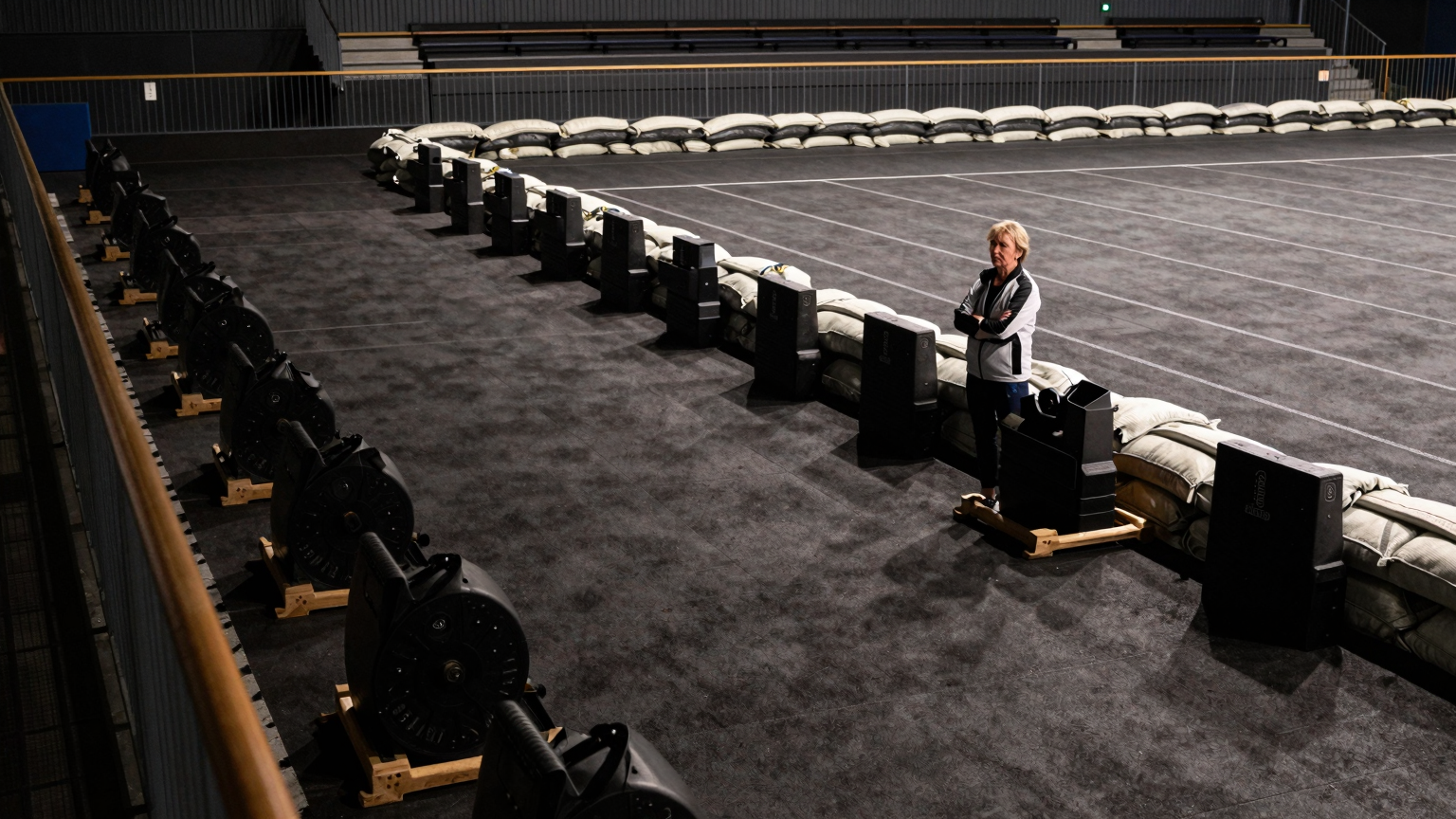
That is why the evidence test matters more than the policy. A policy says what should happen. An evidence trail shows what did happen, who decided, and when. When something unforeseen occurs, the organiser's own words are the standard. Hyrox co-founder Moritz Fürste said after the Beijing incident that it was his job to foresee potential incidents and he did not, and that the organisation had started improving event processes and making rulebook changes immediately. The apology was public. The rule change was specific. The refunds followed. That is what accountability looks like when it is written down.
For your portfolio, the equivalent is not a statement on Instagram. It is a named decision-maker, a written duty, and a record that shows the decision was made before the inspector arrived.
What an inspector, insurer or buyer actually asks to see
They do not ask whether you care. They ask for the document that proves the control was in place on the day. In a hotel or serviced apartment, that usually means three things: the water treatment log for the domestic hot and cold water systems, the fire door inspection record for the corridors and plant rooms, and the incident or near-miss log that shows what happened and what you did about it.
Where does that evidence usually live? In a hotel, it is often split across a maintenance folder, a contractor's email, a housekeeping app and a paper file in the duty manager's office. That is the problem. An inspector will not chase four locations. They will ask for the record, and if you cannot produce it, the absence becomes the finding.
Good looks like this: one place where the record lives, one person named as the decision-maker for each control, and a version history that shows the record was updated when the check was done, not when the visit was announced. The Terrorism (Protection of Premises) Act 2025 statutory guidance sets out how to assess the reasonable expectation of individuals present at premises and events, which is the same logic: the assessment has to be documented, not assumed. You can read the non-statutory supplementary document A on assessing reasonable expectation for the method the Home Office expects.
For hotels and serviced apartments, the inspector will also look at the shared equipment and communal areas. In a fitness suite, that means the rowing machines, the mats, the changing rooms. In a serviced apartment, it means the shared laundry, the bin store, the corridor carpet. The question is not whether you cleaned it. The question is whether you can show when it was cleaned, who signed it off, and what you did when a guest reported a problem.
The refund question is a reputation question
After the Beijing incident, Hyrox China offered full refunds to competitors affected, including those who started before 2.40pm on Saturday but had not finished by that time, and all athletes who left in heat waves between 2.40pm and 8.40pm. That is a direct cost. But the bigger cost is the one that does not appear on the refund line: the participants who did not complain, did not ask for a refund, and did not come back.
Two costs run in parallel here, and only one of them is published. The Sentencing Council guideline puts a serious breach by a large organisation in a £2.6m to £10m range, and the guideline is explicit that a fine should be substantial enough to have a real economic impact on the organisation. The other cost never appears in a register: the corporate account that quietly stops booking, the occupier that does not renew, the agent who takes your building off the shortlist. Nobody writes to tell you that one has happened.
In a hotel or serviced apartment, the same pattern plays out. A guest reports a problem with the water, the heating or the cleanliness of a shared space. The front desk logs it. The maintenance team fixes it. The guest checks out and says nothing. They do not complain. They do not come back. And the review, if it appears at all, is written weeks later by someone who has already decided.
That is why the evidence trail is not just for the inspector. It is for the renewal conversation. When a corporate client asks how you handled the incident in March, you need to be able to show the log, the action and the follow-up. If you cannot, the client assumes the worst, because the absence of a record reads as the absence of a control.
The UK Visas and Immigration guidance on post-enforcement visit actions is a useful reminder of how official bodies treat records after a visit: the file is the case. If the record is incomplete, the enforcement action follows the gap, not the intention.
What good looks like in a hotel or serviced apartment
Start with the named decision-maker. For each building, one person owns the compliance record. Not the contractor. Not the regional manager. One name, written into the role profile, with the authority to stop work if the record is not complete.
Then the written duty. The rule change that Hyrox made after Beijing is a good example of specificity: a race director may withdraw a racer on medical grounds if their blood, vomit or urine poses a welfare or contamination risk, and the withdrawal is recorded as Did Not Finish. That is a written duty with a named role and a recorded outcome. Your portfolio needs the same clarity for water hygiene, fire safety and incident response.
Then the evidence trail. In a hotel, that means the water treatment log is signed on the day the check is done, not the day before the audit. The fire door inspection record shows the door, the floor, the date and the action. The incident log shows what happened, who decided, what was done, and when the guest was told. If a guest reports a problem with a shared facility, the log should show the time of the report, the time of the response, and the time the area was returned to service.
That is what an insurer will ask for after a claim. That is what a buyer will ask for during due diligence. And that is what a corporate client will ask for when they decide whether to renew.
Your 60-second self-check
- Could you produce the last quarter's water treatment log for every hotel and serviced apartment in your portfolio, today, without asking anyone?
- Is there one named person per building who owns the incident log and has the authority to stop work if the record is incomplete?
- When a guest reported a problem with a shared facility in the last six months, can you show the time of the report, the action taken and the time the area was returned to service?
If you want to walk into your next board or senior management meeting with answers rather than follow-ups, run the free 5-minute Director's Risk Check. It gives you a control score for your portfolio, the breach exposure with official sources, and a board-ready briefing you can send to a colleague to answer. Start here: Director's Risk Check.
Herman's verdict
The apology is the easy part. The refund is the visible part. The record is the part that decides whether the guest comes back, the insurer pays, and the board hears a sentence they can live with. If you cannot produce the log in ten minutes, you do not have a compliance problem. You have a reputation problem waiting for the next incident to surface it.
— Herman
Until next time — keep the evidence closer than the deadline.
Walk into your next senior management meeting with the answers
The free Director's Risk Check for UK portfolios takes five minutes. No sign-up to see your score.
- Your control score across compliance, evidence, oversight, cost and renewals
- The breach exposure in your portfolio, with the official source for each penalty
- A board-ready briefing with your three priorities and a 30/60/90-day plan
About HermanWa
HermanWa is a building compliance and operations platform for property and facilities teams in the United Kingdom and Singapore, with portfolios across the Gulf. It keeps one auditable file per building — statutory deadlines, inspection evidence, contractor work, energy and carbon — and its AI assistant, Herman, answers questions about your buildings in plain English. HermanWa tracks obligations including fire risk assessments and fire door checks, Building Safety Act duties, Legionella (ACOP L8), EICR, gas safety and EPC in the UK, and SCDF fire certificates, Periodic Facade and Structural Inspections, lift permits and Green Mark in Singapore. Directors can check their exposure with the free Director's Risk Check.