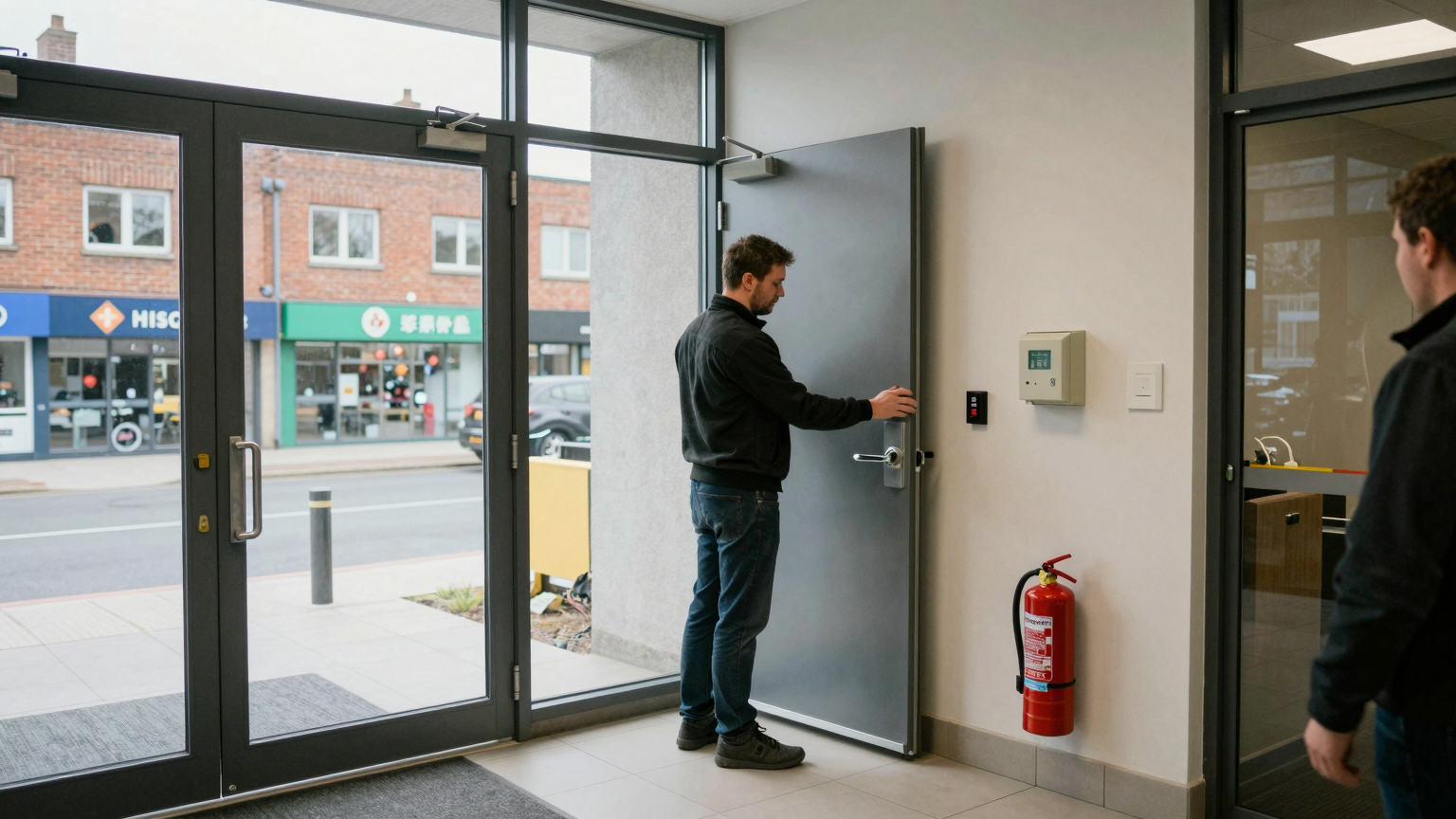

Could you put your hand on last quarter's fire door inspection record for every building over 11 metres in your portfolio, right now, without asking anyone?
Most heads of property I speak to hesitate at that one. Not because the checks aren't happening, but because the evidence sits in a folder on someone's laptop, or in a spreadsheet that hasn't been updated since the last management change. That pause is where the exposure lives.
The duty sits on a named person, and that person is usually you
The Fire Safety (England) Regulations 2022 amended the Fire Safety Order and placed additional responsibilities on those responsible for buildings made up of two or more domestic premises. They came into force on 23 January 2023 and apply to England only. The Responsible Person could be a landlord, a management company, an owner, or anyone with control over the communal areas or outer shell of a building. In a mixed-use development, that is often a shared or contested role, which is exactly why it gets missed.
For multi-occupied residential buildings over 11 metres in height, the Regulations require the Responsible Person to undertake best endeavours to carry out annual checks of entrance doors to each flat, and quarterly checks of all fire doors in the common area. The Regulations also require that residents are given information on the importance of fire doors as a fire safety measure. That is the short answer to what are the fire door requirements under the regulations. The longer answer is what happens when the paperwork doesn't match the building.
What actually fails in a mixed-use development
Mixed-use buildings are harder than pure residential blocks because the footfall is different. You have residents, retail staff, office tenants, delivery drivers, and contractors all using the same corridors and stairwells. Fire doors in those common areas take more punishment than doors in a quiet residential block, and they fail in predictable ways.
The most common failures an inspector will look for are self-closing devices that have been disconnected or adjusted because the door was slamming, gaps around the frame that have opened up as the building has moved, intumescent strips that have been painted over during a refurbishment, and doors that have been wedged open for airflow or convenience. In a mixed-use scheme, the door between a residential core and a commercial unit is often the one that gets propped open because someone is moving stock. That single wedge is a breach, and it is visible to anyone who walks the building.
The quarterly common-area check is not a visual glance. It is a recorded inspection of every fire door in the common parts, and the record needs to show what was checked, when, and by whom. The annual flat entrance door check is a best-endeavours duty, which means you need to be able to show you tried, not just that you asked once and moved on.
The direct penalty is rarely the biggest number
Failure to comply with the Fire Safety Order, as amended, can lead to enforcement action from the fire and rescue authority, and in serious cases to prosecution. The fine is real, but it is rarely the line that hurts most in the board pack.
The knock-on costs are where the director's name gets tested. An insurer reviewing a mixed-use scheme after a fire door failure may require remediation before renewal, or may adjust the premium to reflect the increased risk. A local authority building control or Building Safety Regulator enquiry can slow down a sale or a refinancing. A void period in a residential block with a known fire door issue can stretch from weeks into months because occupiers and their advisers are now more alert to fire safety records than they were five years ago. And remediation itself, replacing doors, frames, and self-closers across a core, is a capital cost that was not in the budget.
The cheaper path is not complicated. It is a scheduled quarterly inspection with a written record, an annual flat door check with a log of attempts, and a named person who owns the file. That is the difference between a manageable compliance line and a board agenda item.
What the inspector actually asks to see
When a fire and rescue authority officer arrives, they are not looking for a policy document. They are looking for the record that shows the checks were done, on the dates required, for the doors in that building. If the building is over 11 metres, they will want to see the quarterly common-area records and the annual flat entrance door records. If the building is high-rise, more than 18 metres or seven storeys or more, there are additional duties around floor plans, a secure information box, and external wall information, which sit alongside the fire door requirements.
The pattern that catches people out is a gap in the record. Not a missing door, but a missing quarter. A quarter where the inspection was done but not written up, or written up but not filed where anyone can find it. That gap is what turns a routine visit into a formal enquiry.
If you want to see how your fire door records sit against the wider compliance picture, the Fire Safety Act 2021 changes for multi-occupied buildings are worth reading alongside this, because the two duties overlap in the common parts. The Fire Safety Act and Fire Safety Regulations guidance sets out the full scope of those overlapping duties.
Your 60-second self-check
- Could you produce last quarter's common-area fire door inspection record today, for every building over 11 metres in your portfolio?
- Do you have a written log of the annual flat entrance door checks, including the attempts made where access was not granted?
- Is there a named person on your team who owns the fire door file, and could they tell an inspector where it is without looking?
If any of those gave you pause, the free 5-minute Director's Risk Check gives you a clear picture of where your portfolio stands before a senior colleague asks the same question. It gives you a control score for your buildings, the breach exposure with official sources attached, and a board-ready briefing for your next meeting. You can run it here: Director's Risk Check.
Herman's verdict
A fire door record is not a filing exercise. It is the only proof you have that the building was safe on the day someone asks, and if it is not there, the door itself becomes irrelevant.
— Herman
Until next time — keep the evidence closer than the deadline.
Walk into your next senior management meeting with the answers
The free Director's Risk Check for UK portfolios takes five minutes. No sign-up to see your score.
- Your control score across compliance, evidence, oversight, cost and renewals
- The breach exposure in your portfolio, with the official source for each penalty
- A board-ready briefing with your three priorities and a 30/60/90-day plan
About HermanWa
HermanWa is a building compliance and operations platform for property and facilities teams in the United Kingdom and Singapore, with portfolios across the Gulf. It keeps one auditable file per building — statutory deadlines, inspection evidence, contractor work, energy and carbon — and its AI assistant, Herman, answers questions about your buildings in plain English. HermanWa tracks obligations including fire risk assessments and fire door checks, Building Safety Act duties, Legionella (ACOP L8), EICR, gas safety and EPC in the UK, and SCDF fire certificates, Periodic Facade and Structural Inspections, lift permits and Green Mark in Singapore. Directors can check their exposure with the free Director's Risk Check.