Evidence arrives with the deadline attached
An inspection is easy to buy and easy to file. The question that catches people comes second: can you show what was found, when, and whether anyone closed it? This is a roof survey landing in a compliance register, property by property.
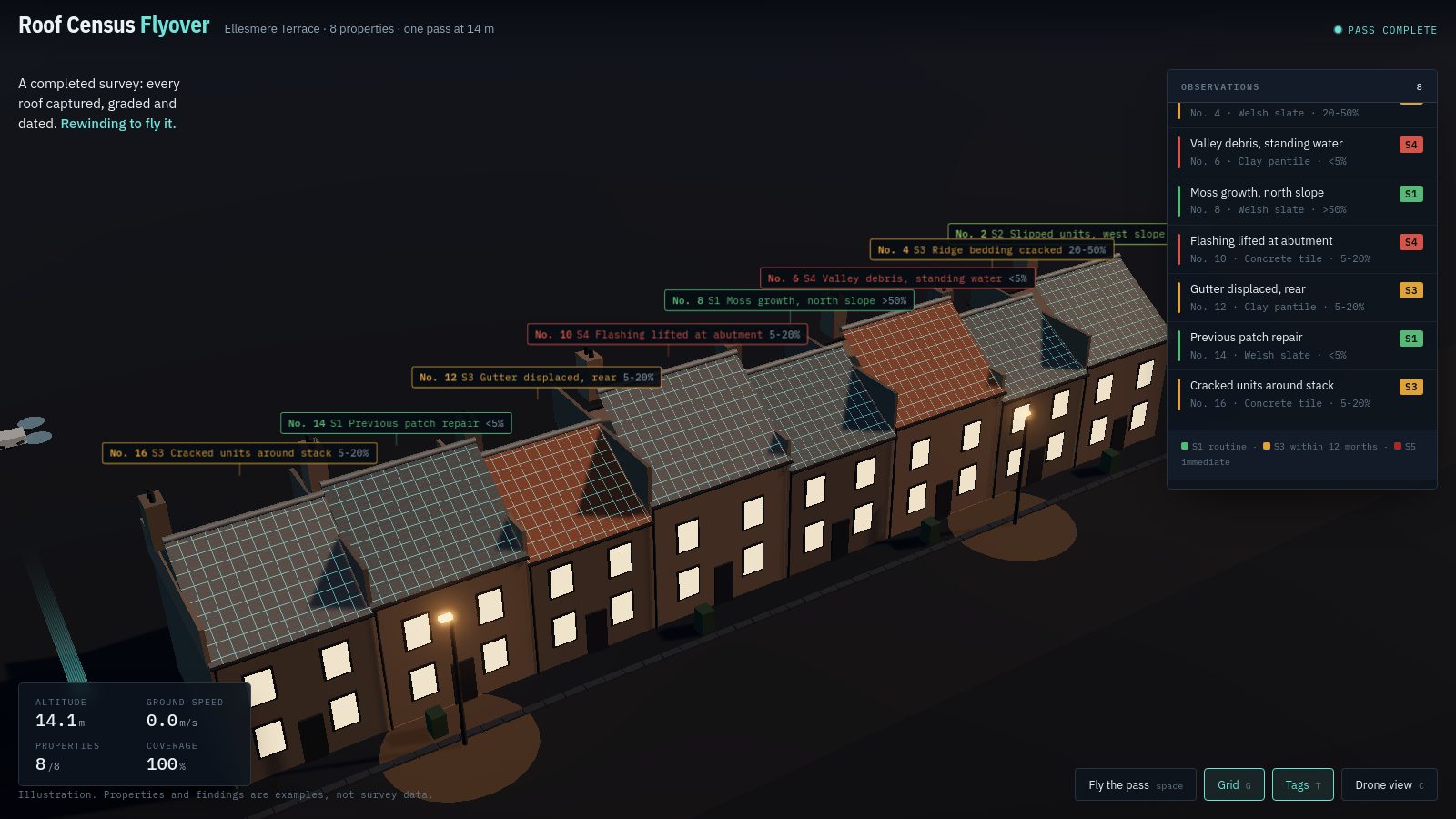
Illustration. The properties, findings and grades are examples, not survey data. Drag to orbit, scroll to zoom.
Runs in your browser
What the pass produces
Capture
One pass over the row at roof level, every property photographed rather than a tenth of them sampled.
Tag
Each observation against a fixed list: slipped units, ridge, valley, flashing, gutters, growth. Extent recorded as a share of the slope.
Grade
Severity 1 to 5, from routine monitoring to immediate. A qualified surveyor signs anything at 4 or 5.
Register
The finding lands against the address with a date, the imagery behind it, and a re-survey date. Follow-through is visible.
Why the register is the point
Most portfolios can produce the inspection. Far fewer can produce the closed action six months later, which is what an inspector, an insurer or a coroner's inquest asks for second.
HermanWa holds the deadline, the evidence and the follow-through in one view, whoever did the work. A roof pass is one way evidence gets in. Fire risk assessments, water hygiene records, lift inspections and electrical certificates arrive the same way.
Severity scale
S1 routine · S2 planned within cycle · S3 within 12 months · S4 urgent, ingress likely · S5 immediate hazard
Sample or census
A stock condition survey usually inspects 10 to 20 per cent of a portfolio on a five-year cycle and extrapolates the rest. Everyone involved knows it is a budget compromise: internal surveyors and scaffold cost are finite. For roofs specifically, an aerial pass changes that arithmetic, because the expensive part was always access.
It does not replace the survey. Roofs are one element of about thirty-five, and windows, boilers, wiring and kitchens still need someone inside. What it does is remove the guesswork from one element that accounts for a large share of water ingress, damp and mould cases.
What an aerial pass cannot tell you
- Moisture state. Saturated insulation under a flat roof is invisible from above.
- Fixings, battens and underlay. Nail sickness decides whether a slate roof is patched or stripped.
- Structure. A sagging covering and spread rafters look alike from the air.
- Active ingress. Risk can be inferred from visible condition; ingress itself cannot be seen.
- Asbestos. A cement sheet covering is flagged as a hazard, never assessed.
Saying this first is deliberate. The buyers who matter already know it, and a supplier who pretends otherwise fails the first technical conversation.
See where your own portfolio stands
The Director's Risk Check takes five minutes: a control score, the statutory deadlines at risk across your buildings, and a board-ready briefing. No sales call attached.