A whole ward in one morning, not a tenth of it
Stock condition surveying is usually a sample: inspect one property in ten, extrapolate, and price a programme from the result. The extrapolation is where the money goes missing — in both directions. This is the same work done as a census.
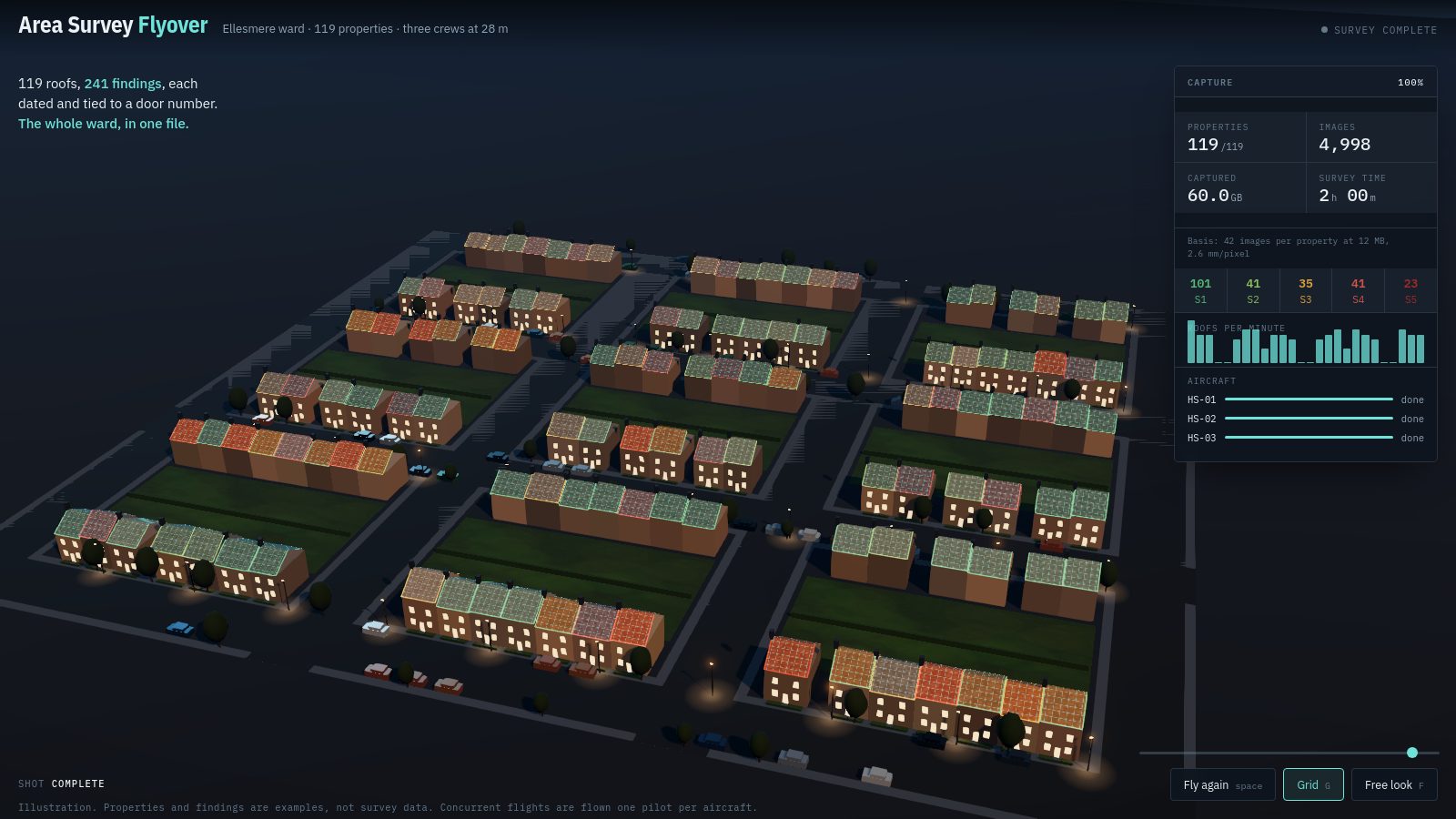
Illustration. The ward, the properties and the grades are examples, not survey data. Scrub the timeline, or press F to look around.
Runs in your browser
- Properties
- 119
- Captured
- 60GB
- Survey time
- 2h
- Findings
- 241
Why sampling costs you
A sample hides both surprises
Sample at one in ten and you meet the bad roofs late, usually as an emergency, at emergency prices. You also carry properties in the programme that did not need the work — priced in, planned for, and never questioned, because nobody looked.
A census does not make the stock better. It makes the programme match the stock, which is a different and considerably cheaper thing.
What changes at census scale
- Every property has a grade, so the programme is ranked rather than assumed.
- The same standard, the same day, the same light — findings are comparable across the ward.
- Re-fly next year and you have a rate of change, not a fresh opinion.
- A stock condition figure you can show a board, a lender or a regulator, with the imagery behind it.
How the flight works
Three crews, one district
The ward is split into bands and flown concurrently, one pilot per aircraft. Each aircraft flies a serpentine over its band at 28 m, capturing every roof on the same pass rather than returning for the ones a sample missed.
Basis
42 images per property at roughly 12 MB, 2.6 mm per pixel. A ward of this size is about 5,000 images and 60 GB, captured in a two-hour window.
Then it lands somewhere
Capture is the easy half. Each finding arrives against its address with a grade, a date, the imagery behind it and a re-survey date, so the question that comes six months later — did anyone close it? — has an answer.
That is the same register that holds fire risk assessments, water hygiene records and electrical certificates. A roof census is one way evidence gets in.