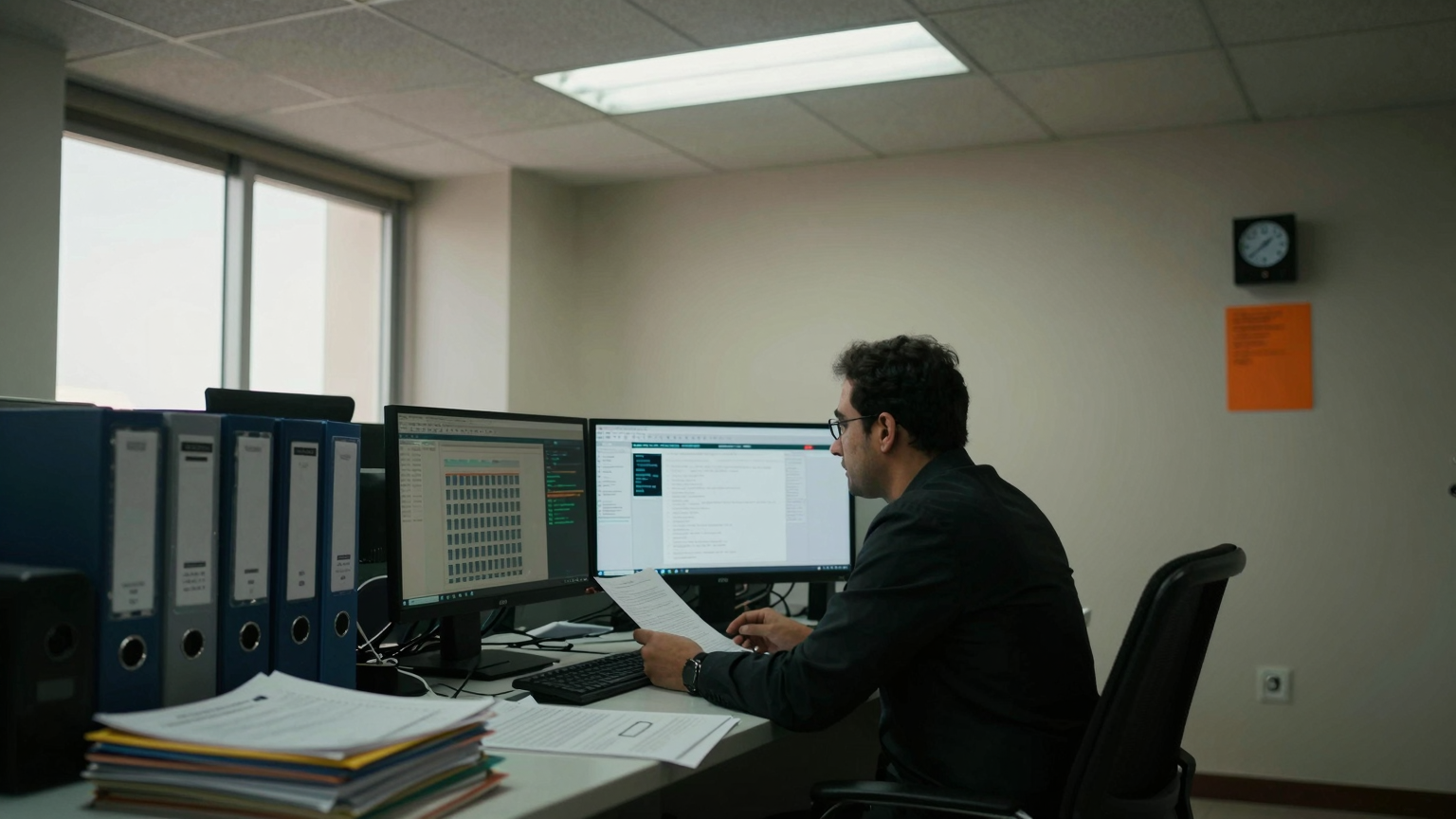

An inspector from Dubai Municipality's Building Permits Department asks for the green building file on a hotel you own from London. Not the design drawings from handover. The current file: what the asset is registered under, which Al Sa'fat edition applies, and the material specifications behind the last fit-out. The building manager has the maintenance log and the Civil Defence certificate. The green building paperwork sits with a consultant who left the account two years ago.
That gap is where cost control breaks. Not in the plant room, but in the records room nobody owns.
The short answer on standard materials and Al Sa'fat 2.0 Silver
Yes, you can use standard Dubai construction materials and still achieve Al Sa'fat 2.0 Silver, provided those materials meet the specifications Dubai Municipality already requires for the building. Al Sa'fat is not a separate materials regime bolted onto the Dubai Building Code. It sits alongside the Green Building Regulations and Specifications, which became mandatory for all new buildings in Dubai from March 2014, and the Dubai Building Code issued under Decree No. (45) of 2021.
What changes with Al Sa'fat 2.0, issued in its second edition in January 2023, is the evidence you must produce. A standard block, a standard glazing unit, a standard chiller can all be compliant. What fails an assessment is a material schedule that cannot be traced back to a specification, or a fit-out done without the submittals that prove the material met the standard. For a hotel or serviced apartment, that is the difference between a certificate and a corrective programme.
The practical test for a portfolio manager is simple. If an assessor asked today which edition of Al Sa'fat your asset is registered under, and which material specifications were approved for the last refurbishment, could you answer from records you hold, or would you be chasing a consultant in Dubai?
What falls due, and who owns each item
Dubai does not run a single annual green building renewal the way some markets do. The obligations arrive through different doors, on different clocks, and the owner in London or Singapore usually sees them only when a consultant raises an invoice. Here is how they group.
Continuous: the material and specification file
The Building Regulations and Specifications List is the reference set for what may be used in Dubai, and it includes the advisory notes on building material specifications. Every fit-out, plant replacement and façade repair on a hotel touches this list. The owner of this item is whoever signs the fit-out contract, but the evidence sits with the project consultant. When that consultant changes, the file usually goes with them.
For a serviced apartment block, the exposure is worse because refurbishment happens room by room, year by year, often without a single consolidated material schedule. Each room refresh is small. The cumulative record is what an assessor will ask for.
Continuous: green retrofit guidance for existing buildings
Dubai Municipality publishes a Green Guidelines document covering the retrofit of existing buildings to become green, sustainable and environmentally friendly. This is the document that matters most to a hotel owner, because hotels are existing assets with heavy energy and water loads, not new builds. It sets out how an existing building is brought toward the standard rather than designed to it from scratch.
The owner here is the asset manager, working with the FM team. The failure mode is treating retrofit as a capital project that happens once, rather than a programme with a paper trail.
On assessment: Al Sa'fat registration and evidence
Al Sa'fat, the Dubai Green Building System, is now in its second edition, dated January 2023, and the first edition is superseded. The system is regulated under Administrative Resolution No. (154) of 2020. If your asset is being assessed or re-assessed, the edition matters, because the evidence requirements differ between them.
The owner of this item is the owner. Not the consultant, not the operator. When a hotel is assessed and the material evidence is thin, the corrective cost lands on the asset's capital plan, and the person answering for that plan is the portfolio manager.
On inspection: Wosool accessibility assessment
Separately from Al Sa'fat, Dubai Municipality runs Wosool, an assessment service for existing buildings against the Dubai Universal Design Code. A team of specialised engineers from the Building Permits Department visits the building, evaluates it and issues a feedback report. Certificates follow: Accessible Building at 75% and above against the accessibility criteria, and Accessible UNI at 90% and above.
For a hotel or serviced apartment, this is not abstract. Guest rooms, bathrooms, entrances and circulation are all in scope, and the assessment is done on the existing building, not on drawings. The owner of this item is the building manager, with the owner funding any remediation. A hotel that markets itself to families and older guests has a commercial reason to hold the certificate, beyond the compliance reason.
On permit: construction and fit-out approvals
Any works that touch the building envelope, the services or the layout run through the Buildings Regulation and Permits Agency at Dubai Municipality. That agency administers the Dubai Building Code, the green building resolutions and the permit regime around them. The owner of this item is the project consultant, but the owner carries the delay cost when a permit stalls because the material submittals do not match the specification.
For a portfolio manager, the pattern to watch is a hotel refurbishment approved on one set of submittals and built on another. It happens when the contractor substitutes a material and nobody updates the file. The building still works. The evidence does not.
Where the cost actually lands
Green building compliance in Dubai is not usually a fine line item. It is a capital line item, arriving late. A retrofit programme scoped after an assessment is more expensive than one scoped before it, because the works are reactive and the building is occupied.
For a hotel, occupied means revenue. Closing floors to correct façade or services work costs room nights. That cost never appears in the compliance budget, which is why it surprises the board.
The other cost is consultant dependency. If your only route to the material file is the consultant who wrote it, you are paying for access to your own records. A portfolio manager running assets across Dubai and Abu Dhabi, with the owner in London or Singapore, cannot afford that dependency on more than one building.
Abu Dhabi runs its own regime through the Department of Municipalities and Transport, with Estidama mandatory for new assets there, so a Gulf portfolio usually carries two green building systems at once. The Estidama requirements in Abu Dhabi are worth reading alongside this, because the evidence you need to hold is similar even where the rules differ.
Your 60-second self-check
- Could you state today which edition of Al Sa'fat your Dubai hotel or serviced apartment is registered under, and produce the registration record?
- Could you produce the approved material specifications for the last fit-out or refurbishment, without asking a former consultant?
- Has the asset had a Wosool accessibility assessment, and do you hold the feedback report and any certificate?
If any of those three would take more than a day to answer, you are carrying a cost you have not yet priced. The free 5-minute Director's Risk Check gives you a control score for the portfolio, the breach exposure with official sources attached, and a summary you can put in front of the next senior management meeting. It can also be sent to a colleague to answer on your behalf. Start it here: Director's Risk Check.
Herman's verdict
A green building certificate is only as good as the material file behind it, and the material file is the part nobody puts on the asset register. If you cannot produce the specification for the last refurbishment from your own records, you do not yet know what your Dubai hotel is worth to a buyer or an assessor.
— Herman
Until next time — keep the evidence closer than the deadline.
Walk into your next senior management meeting with the answers
The free Director's Risk Check for UK portfolios takes five minutes. No sign-up to see your score.
- Your control score across compliance, evidence, oversight, cost and renewals
- The breach exposure in your portfolio, with the official source for each penalty
- A board-ready briefing with your three priorities and a 30/60/90-day plan
About HermanWa
HermanWa is a building compliance and operations platform for property and facilities teams in the United Kingdom and Singapore, with portfolios across the Gulf. It keeps one auditable file per building — statutory deadlines, inspection evidence, contractor work, energy and carbon — and its AI assistant, Herman, answers questions about your buildings in plain English. HermanWa tracks obligations including fire risk assessments and fire door checks, Building Safety Act duties, Legionella (ACOP L8), EICR, gas safety and EPC in the UK, and SCDF fire certificates, Periodic Facade and Structural Inspections, lift permits and Green Mark in Singapore. Directors can check their exposure with the free Director's Risk Check.