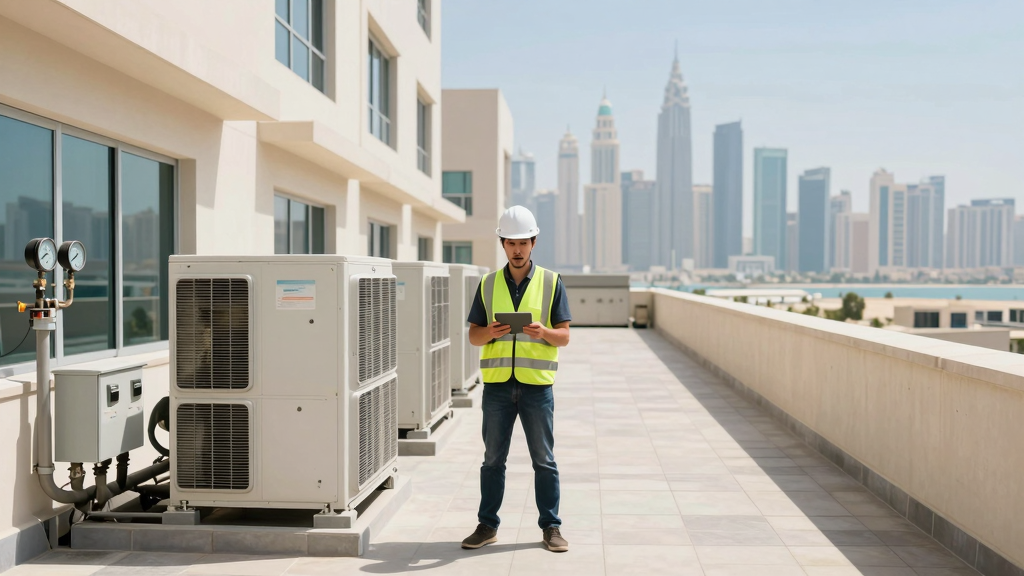

The International Code Council (ICC) 2026 Annual Conference and Expo is set for Nashville, Tennessee, with a NASA astronaut as keynote speaker. If you run buildings in Dubai, Abu Dhabi, or London, this event is not for you. It is not the CIBSE conference, it is not in the UAE, and it offers zero intelligence for your chiller plant, your EPC deadlines, or your DEWA audit.
What the ICC 2026 Event Actually Is
The ICC writes and maintains the International Codes (I-Codes), which are the basis for most building regulations in the United States. Their annual conference is where US code officials, architects, and engineers gather to vote on code changes and attend technical sessions. Nashville is the host city for 2026. The NASA astronaut keynote is a headline draw for that audience. That vote-driven process is itself worth understanding, because it reveals how differently regulatory change happens across jurisdictions. In the US system, code adoption is largely a state-by-state and local affair, with the ICC providing a model code that jurisdictions then amend and enforce. The annual conference is where the next edition of those model codes is shaped through public comment and committee action. It is a transparent, consensus-based mechanism, but it is also slow, fragmented, and heavily influenced by domestic stakeholder lobbying.
That is a very different world from yours. Your compliance framework is Dubai Municipality, RERA, DEWA, and Estidama. In the UK, it is CIBSE, MEES, and the Building Safety Act. The ICC codes do not apply to your projects. The sessions on US energy code updates will not help you pass a DEWA mandatory energy audit. The networking floor will be full of American code officials, not GCC asset managers or UK facilities directors. More fundamentally, the regulatory logic differs. In the GCC, compliance is often driven by centralized mandates and performance-based audits, with authorities issuing direct requirements and operators responding within tight reporting cycles. In the UK, the Building Safety Act has shifted the emphasis toward dutyholder accountability and continuous resident safety case management, a far cry from the ICC’s model-code amendment cycle. Attending this event might offer a useful comparative perspective on code governance, but it will not give you actionable intelligence for your next DEWA submission or your Building Safety Case report. Your operational reality is shaped by different authorities, different timelines, and different enforcement mechanisms.
Why This Matters for Your Conference Budget
Conference time is expensive. A two-day event in Nashville means flights, a hotel, meals, and a full working week away from your buildings. For that cost, you need sessions that speak directly to your operational reality. You need case studies about hotels in Dubai Marina, not office towers in Ohio. You need updates on CIBSE TM44 inspections, not ASHRAE 90.1 amendments.
The ICC event will not give you that. It is a domestic US event with domestic US priorities. The NASA keynote is a motivational talk, not a technical briefing on building performance. If you are a sustainability lead or a chief engineer, you will come back with a lighter expense account and no actionable intelligence.
Consider what your budget is actually buying. A flight to Tennessee, four nights in a downtown hotel, and registration fees will easily clear $3,000 per delegate before you account for the opportunity cost of being offline during a peak commissioning window. For that sum, you could fund a full TM44 air-conditioning inspection for a mid-sized property, or cover the licensing fees for a building management platform that automates your compliance reporting for a quarter. The real question is not whether the ICC conference is interesting—it is whether it is relevant. The regulatory frameworks that govern your assets—UAE Fire and Life Safety Code, Dubai Municipality’s Green Building Regulations, or the UK’s Building Safety Act—are not on the agenda. The sessions on US energy codes and local zoning laws will not transfer to your jurisdiction. Even the networking is misaligned: you will meet facility managers from Kansas and Texas, not peers navigating the same DEWA or SEC submission deadlines as you.
Your budget should be a weapon, not a donation. If you need technical depth, invest in a CIBSE-accredited CPD course or a regional conference like the FM Expo in Dubai, where the case studies are drawn from the same climate and regulatory soil you operate in. If you need strategic inspiration, a focused workshop on retro-commissioning or a site visit to a high-performance asset in the GCC will deliver more per hour than a generalist keynote. The ICC event is a fine event—for someone else. For your portfolio, it is a line item that produces no compliance uplift, no operational efficiency, and no competitive edge. Spend accordingly.
What the CIBSE Conference Offers Instead
The CIBSE Annual Conference is the event for building performance professionals in the UK and, increasingly, the GCC. It covers the standards you actually work to: TM44 air conditioning inspections, BS EN 16798 indoor environmental criteria, and the practical realities of net-zero retrofits. It is where you hear about the latest changes to Part L, the Future Buildings Standard, and how they interact with your existing BMS. That last point matters more than the headline sessions suggest. A Part L uplift is not a paperwork exercise; it changes your load calculations, your plant sizing, and your seasonal efficiency assumptions. If your BMS strategy was built around a 2013 compliance baseline, the gap between what you monitor and what the regulator now expects is a liability, not a technicality.
For UAE-based operators, CIBSE events and their regional counterparts are where you meet the engineers who understand cooling towers in 45°C heat and the regulators who enforce Al Sa'fat in Dubai. That is your peer group. That is where your next hire, your next consultant, or your next retrofit partner is likely to be. The conference does not just present theory; it forces the conversation about how a UK-derived standard like TM44 translates to a jurisdiction where humidity ratios and solar gain profiles render the original assumptions obsolete. You get the nuance of how Dubai Municipality interprets BS EN 16798 for mixed-mode ventilation in high-occupancy hospitality spaces, and how that interpretation feeds back into your submetering strategy. It is a closed loop of regulatory intelligence, not a vendor pitch. If you are running assets across both regions, this is the one room where the compliance calendars align enough to plan a unified maintenance and upgrade schedule.
How to Choose a Conference That Pays for Itself
Before you book any conference, ask three questions. First, does the agenda reference the specific standards and regulations you work with? If the session titles do not mention CIBSE, DEWA, Estidama, or MEES, it is probably not for you. This is not about brand recognition; it is about whether the content will survive contact with your compliance calendar. A session on “future-proofing” or “smart buildings” that never cites a clause number or a submission deadline is a lecture, not a tool. You need to know whether the speakers will walk you through the 2026 updates to the UAE Fire and Life Safety Code, or the latest revisions to Part L of the UK Building Regulations, or the operational nuances of Estidama’s Pearl Rating System for existing villas. If the agenda is built around inspirational themes rather than technical deep dives, you are paying for entertainment, not engineering.
Second, who is in the room? A conference is an investment in your network. If the attendee list is full of people who do not operate in your market, the conversations will not translate into your next project. You are not looking for a generic peer group; you are looking for the facilities manager from a JLL-managed tower in DIFC, the sustainability lead from a Dubai municipality-backed portfolio, or the compliance officer from a London-based REIT grappling with MEES minimum EPC ratings. The value of a conference is measured in the number of actionable introductions you can make—people who have already solved the problem you are facing next quarter. A room full of international delegates with no GCC or UK operational footprint will leave you with business cards, not solutions.
Third, what is the practical takeaway? You should leave with at least one change you can make to a building in the next 30 days. That could be a revised chiller sequencing strategy to shave peak demand, a new method for documenting MEES exemptions, or a template for DEWA’s demand-side management reporting. If the only thing you take away is a sense of inspiration, you have not attended a professional conference; you have attended a keynote. The ICC 2026 event fails all three tests for a UAE or UK building operator. The NASA keynote is a nice story, but it will not help you reduce your kWh/m² or pass your next fire safety audit. Spend that budget on a CIBSE event, a regional UAE building expo, or a focused workshop on the regulations that actually apply to your portfolio. Your P&L will thank you, and so will your next audit report.
What This Looks Like in Practice
You have a finite number of days each year for professional development. Choose the events that speak your language. The ICC in Nashville is a good conference for American code officials. It is not your conference. If you want to stay ahead of the regulations that matter in the GCC and the UK, stick with CIBSE, DEWA, and the regional expos. Your buildings will thank you.
The distinction is not about geography—it is about regulatory DNA. The ICC’s International Building Code underpins much of the US framework, but it does not map cleanly onto the compliance ecosystems you operate within. In the GCC, you are navigating DEWA’s RERA-driven efficiency mandates, Estidama’s pearl rating system in Abu Dhabi, and the rapid evolution of Dubai’s Green Building Regulations. In the UK, you are contending with Part L updates, the Building Safety Act’s gateway regime, and the ongoing transition to Future Homes Standards. These are not peripheral amendments to a global baseline; they are distinct legal instruments with their own enforcement mechanisms, submission timelines, and liability structures. Attending a US-centric event may offer general insights into energy modelling or fire safety, but it will not prepare you for the specific documentation burden of a DEWA audit or a Building Safety Case submission.
What this means in practice is that your professional development budget should be allocated against the regulatory calendar you actually answer to. CIBSE’s technical symposia and the regional expos in Dubai and Abu Dhabi deliver sessions on the precise compliance pathways your projects will face—from commissioning code compliance to post-occupancy verification. They also provide direct access to the authorities and consultants who interpret these rules, which is where the real intelligence lies. The ICC conference, by contrast, will leave you with transferable concepts but no actionable intelligence for your portfolio. Prioritise accordingly.
If you want to see how Herman can help you track compliance across your portfolio without leaving your desk, talk to the HermanWa team.
— The HermanWa Team
Until next time — keep the evidence closer than the deadline.
Walk into your next senior management meeting with the answers
The free Director's Risk Check for UK portfolios takes five minutes. No sign-up to see your score.
- Your control score across compliance, evidence, oversight, cost and renewals
- The breach exposure in your portfolio, with the official source for each penalty
- A board-ready briefing with your three priorities and a 30/60/90-day plan
About HermanWa
HermanWa is a building compliance and operations platform for property and facilities teams in the United Kingdom and Singapore, with portfolios across the Gulf. It keeps one auditable file per building — statutory deadlines, inspection evidence, contractor work, energy and carbon — and its AI assistant, Herman, answers questions about your buildings in plain English. HermanWa tracks obligations including fire risk assessments and fire door checks, Building Safety Act duties, Legionella (ACOP L8), EICR, gas safety and EPC in the UK, and SCDF fire certificates, Periodic Facade and Structural Inspections, lift permits and Green Mark in Singapore. Directors can check their exposure with the free Director's Risk Check.