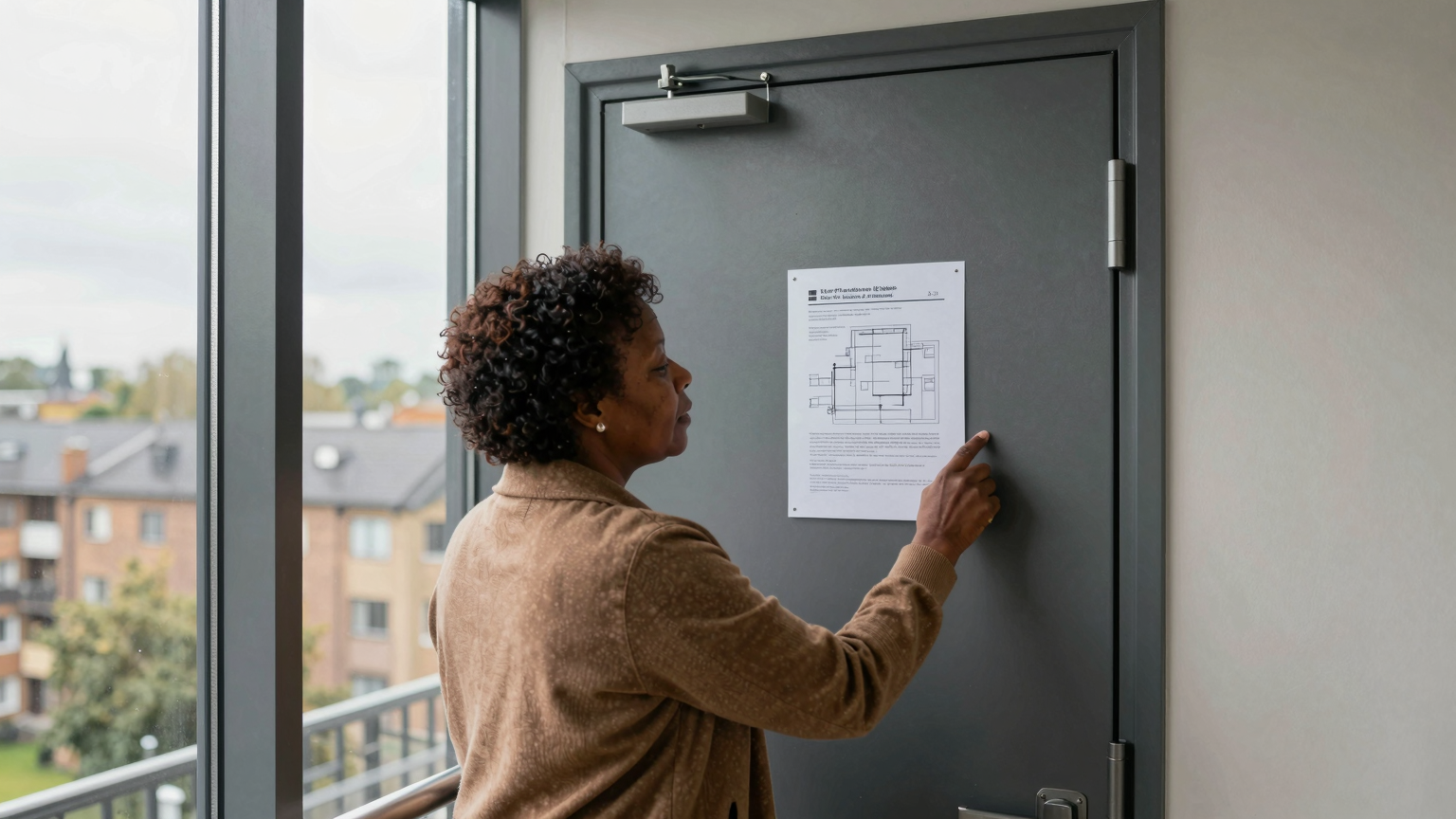

An inspector from the Building Safety Regulator asks to see your Mandatory Occurrence Reporting records for a residential block. You know the building. You know the fire doors, the smoke detectors, the automatic vents. What you cannot immediately produce is the trail showing who reported what, when, and whether it reached the regulator. The inspector waits. The building manager reaches for a folder that may or may not hold the answer.
That moment is where the question who is required to submit a Mandatory Occurrence Report? stops being academic and starts being your problem.
The duty sits with the Accountable Person, not the contractor
Under the Building Safety Act 2022, the London Borough of Waltham Forest is legally required to have a Mandatory Occurrence Reporting system in place for higher-risk buildings. The system enables reporting serious safety issues to the Building Safety Regulator. That is the council's own duty as a landlord. For a residential block, the same principle applies to whoever holds the Accountable Person role.
The Accountable Person is the duty holder for the building. They are required to operate the MOR system, decide whether an incident meets the threshold, and submit the report to the BSR. A managing agent, a facilities contractor or a building manager can gather the facts and prepare the paperwork, but the legal duty does not transfer with the task. If the report is late or missing, the regulator looks to the Accountable Person.
This matters because the building manager is often the person who first sees the defect. A fire door that will not close. A crack in a structural wall. A smoke detector that failed its test. The building manager's job is to escalate it through the MOR process. The Accountable Person's job is to make sure that process exists and that the report reaches the BSR when required.
What counts as a mandatory occurrence in a residential block
A mandatory occurrence is a serious building safety issue or incident that, if not remedied, could cause death or serious injury to multiple people, or major damage to the building. In a residential block, the incidents that meet this threshold include structural failure, fire or smoke spreading, defective building work, unexpected failure of construction materials, discovery of structural defects, and failure of key fire safety systems such as fire doors, smoke detectors and automatic vents.
The examples are deliberately specific because the threshold is not about routine repairs. A resident reports a dripping tap. That goes through the Resident Portal or the council's repairs line. A resident reports that smoke is spreading through a corridor because a fire door has failed. That is a different category. The Building Safety Team investigates, decides whether it meets the criteria, and submits a report to the Building Safety Regulator if required.
For the building manager, the practical test is simple. If the issue could kill or seriously injure multiple people, or cause major damage to the building, it belongs in the MOR process. If it is a routine repair, it does not. The grey area is where most portfolios get caught, because a defect that looks routine on Monday can look structural by Friday.
The evidence the board will ask for
When a director asks whether the portfolio is ready for a MOR inspection, the answer is not a policy document. It is a record. The board will want to see the MOR system in place, the named person responsible for submitting reports, and the log of incidents that were assessed and either reported or ruled out.
The Building Assessment Certificate process makes this concrete. When the BSR directs a Principal Accountable Person to apply for a BAC, the application requires information about the Mandatory Occurrence Reporting System, including details about the system in place for reporting building safety incidents. The PAP must submit a Safety Case Report, a Residents' Engagement Strategy, and a statement confirming all Accountable Persons have supplied relevant information to others. The application has to be submitted through an online portal within 28 days of the direction.
That 28-day window is where evidence and data either hold up or fall apart. If the MOR log is incomplete, the Safety Case Report cannot honestly describe the system. If the Residents' Engagement Strategy has not been consulted on, the application is weaker. The BSR assesses these applications proportionately, but it still expects the documents to exist and to match what is actually happening in the building.
For a building manager, the evidence the board will ask for is usually three things: the MOR log for the last twelve months, the name of the person who submitted each report, and the outcome. If any of those three cannot be produced for a residential block in the portfolio, the board is exposed.
The three decisions to take
First, confirm who holds the Accountable Person role for each higher-risk building. This is not a job title on an org chart. It is the legal duty holder. If the role is unclear, the MOR system has no owner. The building manager needs to know who to escalate to, and the director needs to know whose name is on the report.
Second, test the MOR log against the building's actual incidents. Pull the last twelve months of fire door failures, smoke detector faults, structural defects and fire spread incidents. Check whether each one was assessed against the mandatory occurrence criteria. If the log is empty but the building has had incidents, the system is not working. The London Borough of Waltham Forest's Mandatory Occurrence Reporting guidance sets out the criteria clearly, and the same criteria apply to any Accountable Person.
Third, make sure the MOR system is documented well enough to survive a BAC application. The BSR expects the PAP to submit information about the MOR system as part of the Building Assessment Certificate process. That means the system needs to be written down, not just understood. The Building Safety Regulator's guidance on Building Assessment Certificates explains what the application requires, including the Safety Case Report and the Residents' Engagement Strategy. If the MOR system is not documented, the application will show it.
For directors running multiple residential blocks, the pattern repeats. The building manager holds the operational knowledge. The Accountable Person holds the legal duty. The board holds the risk. The only way to close the gap is to make the MOR process visible, logged and owned.
Your 60-second self-check
- Could you name the Accountable Person for each higher-risk residential block in your portfolio today?
- Could you produce the MOR log for the last twelve months, showing which incidents were assessed and which were reported to the BSR?
- Could you show where the MOR system is documented in the building's Safety Case Report or BAC application?
If you cannot answer all three with confidence, you are not alone. Most portfolios have the building knowledge but not the evidence trail. The free 5-minute Director's Risk Check gives you a control score for your portfolio, shows your breach exposure with official sources attached, and produces a board-ready briefing you can send to a colleague to answer. Before someone more senior asks you where the portfolio stands, run the check and know your own score first.
Herman's verdict
The Mandatory Occurrence Report is not a form the building manager fills in when something goes wrong. It is the evidence that the Accountable Person was paying attention before the regulator asked. If the log is empty, the building is not safe. It is just unexamined.
— Herman
Until next time — keep the evidence closer than the deadline.
Walk into your next senior management meeting with the answers
The free Director's Risk Check for UK portfolios takes five minutes. No sign-up to see your score.
- Your control score across compliance, evidence, oversight, cost and renewals
- The breach exposure in your portfolio, with the official source for each penalty
- A board-ready briefing with your three priorities and a 30/60/90-day plan
About HermanWa
HermanWa is a building compliance and operations platform for property and facilities teams in the United Kingdom and Singapore, with portfolios across the Gulf. It keeps one auditable file per building — statutory deadlines, inspection evidence, contractor work, energy and carbon — and its AI assistant, Herman, answers questions about your buildings in plain English. HermanWa tracks obligations including fire risk assessments and fire door checks, Building Safety Act duties, Legionella (ACOP L8), EICR, gas safety and EPC in the UK, and SCDF fire certificates, Periodic Facade and Structural Inspections, lift permits and Green Mark in Singapore. Directors can check their exposure with the free Director's Risk Check.